CCRN Hematology Review Topics: High-Yield Checklist
TL;DR:
- Memorizing hematology lab patterns, especially DIC, and mastering reversal agents are essential for CCRN success. Practice targeted questions with rationales to develop pattern recognition and clinical judgment under exam conditions. Focus on recognizing key lab clusters and priority actions to maximize exam performance.
Memorize these hematology categories, lock in your lab normals, and practice targeted questions until you can apply them under exam pressure. That is the entire strategy for CCRN hematology review topics. The AACN CCRN exam handbook explicitly lists anemia, coagulopathies (DIC, ITP, HIT), myelosuppression, oncologic complications, and transfusion reactions as testable hematology content. Every one of those categories appears in the exam, and each question carries the same point value as a complex cardiac stem.
TL;DR: Memorize 12 lab normals, master 6 reversal pairs, and drill at least 50 hematology-focused questions with rationales before test day.
Your highest-priority items right now:
- DIC recognition: low fibrinogen + high D-dimer + prolonged PT/aPTT
- Transfusion reaction management: stop the transfusion first, every time
- HIT: platelet drop ≥50% after heparin exposure, stop heparin, start a non-heparin anticoagulant
- Reversal agents: protamine for heparin, vitamin K + PCC for warfarin, idarucizumab for dabigatran
- Tumor lysis syndrome: hyperkalemia, hyperphosphatemia, hypocalcemia, hyperuricemia
- Transfusion thresholds: Hgb <7 g/dL in stable ICU patients, <8 g/dL in active bleed or cardiac history
Table of Contents
- 1. High-yield hematology topics: what to memorize for each subtopic
- 2. Key hematology labs and normal ranges you need to know cold
- 3. Blood products, transfusion thresholds, and reaction management
- 4. DIC, HIT, TTP, and massive transfusion: recognition and ICU priorities
- 5. Anticoagulants and reversal agents: what you must know for the exam
- 6. How hematology actually shows up on the CCRN exam
- 7. Your focused study plan for CCRN hematology prep
- Key Takeaways
- What most nurses get wrong about hematology on the CCRN
- Zerodeficitccrnprep gives you targeted hematology practice, not just content
- Useful sources to bookmark
- FAQ
1. High-yield hematology topics: what to memorize for each subtopic
The AACN Adult CCRN review course syllabus organizes hematology under Module 9, covering anemia, coagulopathies, transfusion reactions, myelosuppression, and oncologic complications. Here is the nurse-to-nurse breakdown of what to actually memorize for each.
Anemia
- Iron deficiency: low MCV (microcytic), low ferritin, high TIBC. ICU priority: identify and treat the source of blood loss.
- B12/folate deficiency: high MCV (macrocytic), neurologic symptoms with B12. Replace the deficient nutrient.
- Hemolytic anemia: elevated indirect bilirubin, elevated LDH, low haptoglobin, positive Coombs test. Watch for acute hemolytic transfusion reactions.
- Aplastic anemia: pancytopenia (low RBC, WBC, platelets). Bone marrow failure. Supportive care; may need transfusion.
- Reticulocyte index: >2% = bone marrow responding (blood loss or hemolysis); <2% = bone marrow not responding (aplastic or nutritional).
Coagulopathies: DIC, HIT, ITP
- DIC: prolonged PT and aPTT, low fibrinogen (<150 mg/dL), high D-dimer, low platelets. Triggers: sepsis, trauma, obstetric emergencies. Treat the underlying cause first; support with FFP, cryoprecipitate, or platelets guided by labs.
- HIT: platelet drop ≥50% typically 5–10 days after heparin exposure. Paradoxical thrombosis risk. Stop all heparin immediately. Start argatroban or bivalirudin.
- ITP: isolated low platelets from antibody-mediated destruction. Fibrin split products are zero (differentiates from DIC). Treat with steroids, IVIG, or splenectomy.
Thrombocytopenia and myelosuppression
- Platelet transfusion threshold: <10,000/µL prophylactically; <50,000/µL before invasive procedures; <100,000/µL in active CNS bleed.
- Neutropenia (ANC <500/µL): febrile neutropenia is an emergency. Broad-spectrum antibiotics within one hour of fever onset.
- Sepsis-related thrombocytopenia: falling platelet trend in a septic patient should prompt DIC workup.
Transfusion reactions
- TRALI: acute hypoxia within 6 hours of transfusion, bilateral infiltrates, no cardiac cause. Stop transfusion, provide oxygen and ventilatory support.
- TACO: fluid overload, hypertension, pulmonary edema. Stop transfusion, give diuretics.
- Acute hemolytic reaction: fever, chills, flank pain, hemoglobinuria. Stop transfusion immediately, IV fluids, monitor renal function.
Oncologic complications
- Tumor lysis syndrome: hyperkalemia, hyperphosphatemia, hypocalcemia, hyperuricemia. Aggressive IV hydration, allopurinol or rasburicase, monitor renal function.
- Febrile neutropenia: temperature ≥38.3°C with ANC <500/µL. Cultures first, then broad-spectrum antibiotics within one hour.
Sickle cell crisis
- Vaso-occlusive crisis: severe pain, end-organ ischemia. Hydration, analgesia, supplemental oxygen.
- Exchange transfusion indication: acute chest syndrome, stroke, priapism unresponsive to initial management.
Pro Tip: Build one flashcard per subtopic using the lab cluster pattern, not isolated values. “Low fibrinogen + high D-dimer + prolonged PT/aPTT = DIC” is one card. That pattern recognition is exactly how the CCRN tests it.

2. Key hematology labs and normal ranges you need to know cold
You will not pass hematology questions by guessing at lab values. These are the numbers the CCRN expects you to recognize as normal, abnormal, or critically abnormal.
| Lab | Normal Adult Range | Clinical Significance on CCRN |
|---|---|---|
| Hemoglobin (Hgb) | 12 g/dL (F); 14 g/dL (M) | Transfuse PRBCs when <7 g/dL (stable) or <8 g/dL (cardiac/active bleed) |
| Hematocrit (Hct) | 37% (F); 42% (M) | Roughly 3× the Hgb value; tracks with anemia severity |
| WBC | — | >10,000 = leukocytosis (infection/stress); <5,000 = leukopenia |
| Platelets | — | <50,000 = bleeding risk; <10,000 = spontaneous bleed risk |
| PT/INR | PT: 11 sec; INR: 1.0 | Elevated in DIC, warfarin use, liver failure |
| aPTT | — | Elevated in DIC, heparin therapy, factor deficiencies |
| Fibrinogen | — | Low (<150) in DIC; high in acute phase reaction |
| D-dimer | <1.0 µg/mL | Elevated in DIC, PE, DVT; not specific alone |
| Reticulocyte count | — | >2% = active marrow response; <2% = marrow failure |
The most testable lab pattern on the CCRN is the DIC cluster: falling fibrinogen combined with rising D-dimer and prolonged PT/aPTT tells you more than any single value alone. A single elevated D-dimer means almost nothing in isolation in an ICU patient. The trend and the cluster are what matter.
For tumor lysis syndrome, watch potassium (>5.5 mEq/L), phosphate (>4.5 mg/dL), calcium (<8.5 mg/dL), and uric acid (>8 mg/dL) together. Any one of those out of range in an oncology patient should trigger a full tumor lysis panel.
3. Blood products, transfusion thresholds, and reaction management
The AACN handbook specifically calls out transfusion of blood products, exchange transfusions, and massive transfusion as examable interventions. Know your indications cold.
Blood product indications at a glance
- PRBCs: Hgb <7 g/dL in stable, non-bleeding ICU patients. Hgb <8 g/dL in active hemorrhage or known cardiac disease. One unit raises Hgb approximately 1 g/dL.
- Platelets: <10,000/µL prophylactically; <50,000/µL pre-procedure; <100,000/µL in active CNS bleed. One apheresis unit raises platelets by roughly 30,000–60,000/µL.
- FFP: Correct coagulopathy when PT/INR is elevated and active bleeding is present, or pre-procedure. Also used in TTP (with plasmapheresis) and warfarin reversal when PCC is unavailable.
- Cryoprecipitate: Fibrinogen <150 mg/dL with active bleeding. Contains fibrinogen, factor VIII, von Willebrand factor, and factor XIII.
- Massive transfusion protocol (MTP): Typically activated when >10 units PRBCs are anticipated in 24 hours. Use a balanced ratio approach (PRBCs:FFP:platelets in a 1:1:1 ratio) to prevent dilutional coagulopathy.
Transfusion reaction recognition and immediate management
Stop the transfusion first. That is the correct first action for every transfusion reaction on the CCRN, regardless of type.
- TRALI: Acute hypoxia, bilateral pulmonary infiltrates, no evidence of cardiac overload, within 6 hours of transfusion. Supportive care: oxygen, mechanical ventilation if needed. No diuretics (not fluid overload).
- TACO: Hypertension, tachycardia, pulmonary edema, JVD. Stop transfusion, sit patient upright, give furosemide.
- Acute hemolytic reaction: Fever, chills, back/flank pain, dark urine (hemoglobinuria), hypotension. Stop transfusion, run normal saline to maintain urine output ≥1 mL/kg/hr, send blood bank workup (repeat type and crossmatch, direct Coombs, urinalysis).
- Febrile non-hemolytic reaction: Fever and chills without hemolysis. Stop transfusion, rule out hemolytic reaction first, then acetaminophen.
Pro Tip: TRALI vs. TACO is a high-frequency CCRN differentiator. TRALI = no fluid overload, no hypertension; treat with oxygen. TACO = fluid overload, hypertension; treat with diuretics. Write those two lines on a flashcard and drill them.
The AACN also tests plasmapheresis (TTP, myasthenia gravis crisis), exchange transfusion (sickle cell acute chest syndrome, severe hemolytic disease), and leukocyte depletion (immunocompromised patients, CMV-negative recipients). Know the indication for each, not the procedure mechanics.

4. DIC, HIT, TTP, and massive transfusion: recognition and ICU priorities
Hematologic emergencies appear in CCRN stems embedded in sepsis, trauma, and oncology scenarios. You need pattern recognition, not a textbook explanation.
DIC
Triggers: sepsis (most common in ICU), trauma, obstetric emergencies, malignancy. Labs: prolonged PT and aPTT, low fibrinogen, elevated D-dimer, thrombocytopenia. The paradox of DIC is simultaneous clotting and bleeding. ICU priorities: treat the underlying cause aggressively, replace fibrinogen with cryoprecipitate when <150 mg/dL, give FFP for coagulopathy, transfuse platelets if <50,000/µL with active bleeding.
HIT
Platelet count drops ≥50% from baseline, typically 5–10 days after heparin initiation. The critical exam point: HIT causes thrombosis, not just low platelets. Stop all heparin (including heparin flushes and heparin-coated catheters). Start argatroban or bivalirudin. Do not give platelet transfusions unless life-threatening bleeding is present.
Massive transfusion
Definition: replacement of one entire blood volume (approximately 10 units PRBCs) within 24 hours. Complications to manage: hypothermia (warm blood products), hypocalcemia (citrate in blood products binds calcium; replace with IV calcium), dilutional coagulopathy (use 1:1:1 ratio of PRBCs:FFP:platelets). Monitor ionized calcium, temperature, and coagulation labs continuously.
TTP vs. HUS vs. DIC
- TTP: Microangiopathic hemolytic anemia, thrombocytopenia, neurologic symptoms, renal dysfunction, fever (the classic pentad). Urgent plasmapheresis is the treatment. PT/aPTT are typically normal (differentiates from DIC).
- HUS: Hemolytic anemia, thrombocytopenia, acute kidney injury. Often follows Shiga toxin-producing E. coli infection. Supportive care; plasmapheresis is less clearly beneficial than in TTP.
- DIC: PT/aPTT prolonged, fibrinogen low, D-dimer high. TTP and HUS have normal coagulation studies.
Pro Tip: The single fastest way to differentiate TTP/HUS from DIC on the CCRN: check the PT/aPTT. Normal coag studies + low platelets + hemolysis = TTP or HUS. Abnormal coag studies + low platelets + high D-dimer = DIC.
5. Anticoagulants and reversal agents: what you must know for the exam
Anticoagulation reversal is one of the most directly testable topics in critical care hematology review. The CCRN will give you a bleeding patient on an anticoagulant and ask what to do next.
Heparin
- Monitoring: aPTT (goal 60–100 seconds for therapeutic anticoagulation) or anti-Xa level.
- Reversal: Protamine sulfate. Dose: 1 mg protamine per 100 units of heparin given in the last 2–4 hours. Maximum single dose is 50 mg.
- HIT exception: Do not reverse heparin with protamine and restart later. Stop heparin entirely and switch to a direct thrombin inhibitor (argatroban, bivalirudin).
Warfarin
- Monitoring: INR. Therapeutic range varies by indication (typically 2.0–3.0 for most indications; 2.5–3.5 for mechanical heart valves).
- Reversal options:
- Vitamin K: slow reversal (hours to days); appropriate for non-urgent situations.
- 4-factor PCC (Kcentra): rapid reversal in active bleeding or emergent surgery. Preferred over FFP in most ICU bleeds because of faster onset and lower volume.
- FFP: use when PCC is unavailable; larger volume required.
DOACs
- Apixaban and rivaroxaban (factor Xa inhibitors): Andexanet alfa (Andexxa) is the approved reversal agent. Note: not universally available; know the indication and that it exists.
- Dabigatran (direct thrombin inhibitor): Idarucizumab (Praxbind) is the specific reversal agent. Rapid, complete reversal. This is the most commonly tested DOAC reversal on the CCRN.
- Monitoring after reversal: Repeat coagulation labs, monitor for re-bleeding, and reassess anticoagulation need within 24–48 hours.
Pro Tip: Make a 3-row table on a notecard: Drug | Monitor | Reversal. Heparin | aPTT | Protamine. Warfarin | INR | Vitamin K + PCC. Dabigatran | TT/ECT | Idarucizumab. That table answers at least 3–4 CCRN questions.
6. How hematology actually shows up on the CCRN exam
The AACN blueprint groups Endocrine, Hematology/Immunology, GI, Renal/GU, and Integumentary into a single domain cluster that accounts for approximately 21% of the exam. Hematology alone is a smaller slice of that cluster. Cardiovascular leads the blueprint at roughly 17% of scored items, with pulmonary at about 15% and multisystem at 14%.
What that means practically: you should not spend equal time on every system. Cardiovascular and pulmonary deserve the most study hours. But hematology questions are not optional. Each one carries the same point value as a cardiac or pulmonary item, so a careless miss on a DIC lab pattern costs you exactly as much as missing a hemodynamics question.
How CCRN hematology questions are structured
Questions are single-best-answer clinical judgment stems. You will rarely see a pure “what is the normal platelet count” question. Instead, expect a scenario: a septic patient with a falling platelet count and rising D-dimer, and you need to identify the next priority action. Lab interpretation combined with immediate management is the dominant question style.
Hematology also appears embedded in multisystem stems. A trauma patient in hemorrhagic shock may require you to recognize DIC developing in the background. An oncology patient with fever requires you to recognize febrile neutropenia and prioritize antibiotics over everything else.
Study time allocation
Spend roughly 8 hours on the combined hematology/immunology/integumentary/musculoskeletal cluster. Within that time, prioritize DIC, HIT, transfusion reactions, and anticoagulation reversal. Those four areas generate the most CCRN-style questions and have the clearest right/wrong answers based on lab patterns and immediate management steps.
7. Your focused study plan for CCRN hematology prep
A scattered review of hematology will not move your score. Here is a concrete 4-step plan that converts knowledge into answerable exam items.
Step 1: Memorize labs and reversal pairs first (Days 1–3)
Before you touch a practice question, lock in the lab table from Section 2 and the reversal table from Section 5. Use spaced repetition: review them on Day 1, Day 3, and Day 7. If you cannot recall fibrinogen’s normal range or which agent reverses dabigatran without looking, you are not ready to drill questions yet.
Step 2: Drill 50–100 hematology-focused questions with rationales (Days 4–10)
Use the hematology practice quiz from Zerodeficitccrnprep to work through targeted questions with detailed rationales. Read every rationale, including the options you got right. For each missed question, write a one-line failure note: “Missed: TRALI does not respond to diuretics.” That note becomes a flashcard.
Step 3: Simulate timed mixed-system blocks (Days 11–21)
Hematology questions on the real exam appear inside cardiovascular, pulmonary, and sepsis stems. Practice with mixed-system timed blocks that include hematology items alongside other systems. This trains you to shift clinical context quickly, which is exactly what the exam demands.
Step 4: Targeted review of missed concepts (Days 22–28)
Pull every failure note from Step 2. Group them by subtopic (DIC, transfusion reactions, reversal agents). Spend 20–30 minutes per day on your weakest cluster. Do not re-read chapters; re-drill questions on that specific topic.
How to use rationales to build clinical judgment
Reading a rationale is not enough. For each missed question, create two flashcards: one for the core fact (“fibrinogen <150 mg/dL = DIC”) and one for the clinical application (“patient with sepsis + falling fibrinogen + rising D-dimer → next action: treat sepsis + replace fibrinogen with cryoprecipitate”). That two-card method converts isolated facts into the clinical judgment the CCRN actually tests.
For broader practice question strategies, including how to eliminate distractors and approach priority-action stems, Zerodeficitccrnprep’s nurse-authored guides walk through the technique in detail.
Pro Tip: When a CCRN stem gives you a patient with multiple problems, ask yourself: “Which problem will kill this patient first?” That is almost always the correct answer. In hematology, that usually means stopping the transfusion, treating the underlying cause of DIC, or starting antibiotics for febrile neutropenia.
Study checklist before test day:
- Lab normals memorized (Hgb, platelets, PT/INR, aPTT, fibrinogen, D-dimer, reticulocyte count)
- DIC lab cluster recognized without hesitation
- Transfusion reaction differentiation (TRALI vs. TACO vs. hemolytic) drilled
- Reversal agent pairs locked in (heparin/protamine, warfarin/PCC, dabigatran/idarucizumab)
- Tumor lysis syndrome electrolyte pattern memorized
- 50+ hematology practice questions completed with rationale review
- Mixed-system timed block completed at least once
Pairing your hematology review with a solid NCLEX-style question practice habit can also reinforce the daily question discipline that carries over directly into CCRN prep.
Key Takeaways
Mastering CCRN hematology review topics requires memorizing lab clusters, not isolated values, and drilling targeted practice questions until pattern recognition is automatic.
| Point | Details |
|---|---|
| Lab clusters beat single values | Memorize DIC pattern (low fibrinogen + high D-dimer + prolonged PT/aPTT) as one unit, not three separate facts. |
| Stop the transfusion first | For every transfusion reaction on the CCRN, stopping the transfusion is the correct first action before any other intervention. |
| Reversal agents are high-yield | Lock in three pairs: protamine for heparin, PCC + vitamin K for warfarin, idarucizumab for dabigatran. |
| Blueprint weight guides study time | The hematology cluster is part of a 21% domain group; prioritize DIC, HIT, and transfusion reactions for the highest return. |
| Zerodeficitccrnprep hematology resources | The platform’s hematology study guide and practice quiz map every subtopic to examable actions and rationale-driven questions. |
What most nurses get wrong about hematology on the CCRN
Hematology gets underestimated because it is a smaller slice of the blueprint. That is the wrong way to think about it. A nurse who skips hematology review and misses four questions on DIC, HIT, and transfusion reactions has lost the same ground as someone who bombed a full cardiovascular block. The math does not care which system the question came from.
The other mistake is studying hematology in isolation. On the actual exam, a DIC question will be wrapped inside a sepsis scenario. A transfusion reaction will appear in a post-operative patient with multiple active problems. If you only practice hematology questions in a hematology-only set, you will recognize the pattern in isolation but freeze when it shows up inside a multisystem stem. Mixed-system timed practice is not optional.
One more thing: do not skip the reversal agents because they feel like pharmacology, not hematology. The CCRN does not separate those categories. A bleeding patient on dabigatran is a hematology question and a pharmacology question at the same time. Idarucizumab, andexanet alfa, protamine, and 4-factor PCC are all fair game, and they appear in stems where the correct answer depends entirely on knowing which reversal agent matches which drug.
Zerodeficitccrnprep gives you targeted hematology practice, not just content
Knowing the material is half the work. The other half is applying it under timed, exam-style pressure. Zerodeficitccrnprep was built by expert ICU nurses specifically for the AACN Adult CCRN exam, and the hematology resources go beyond a study guide.
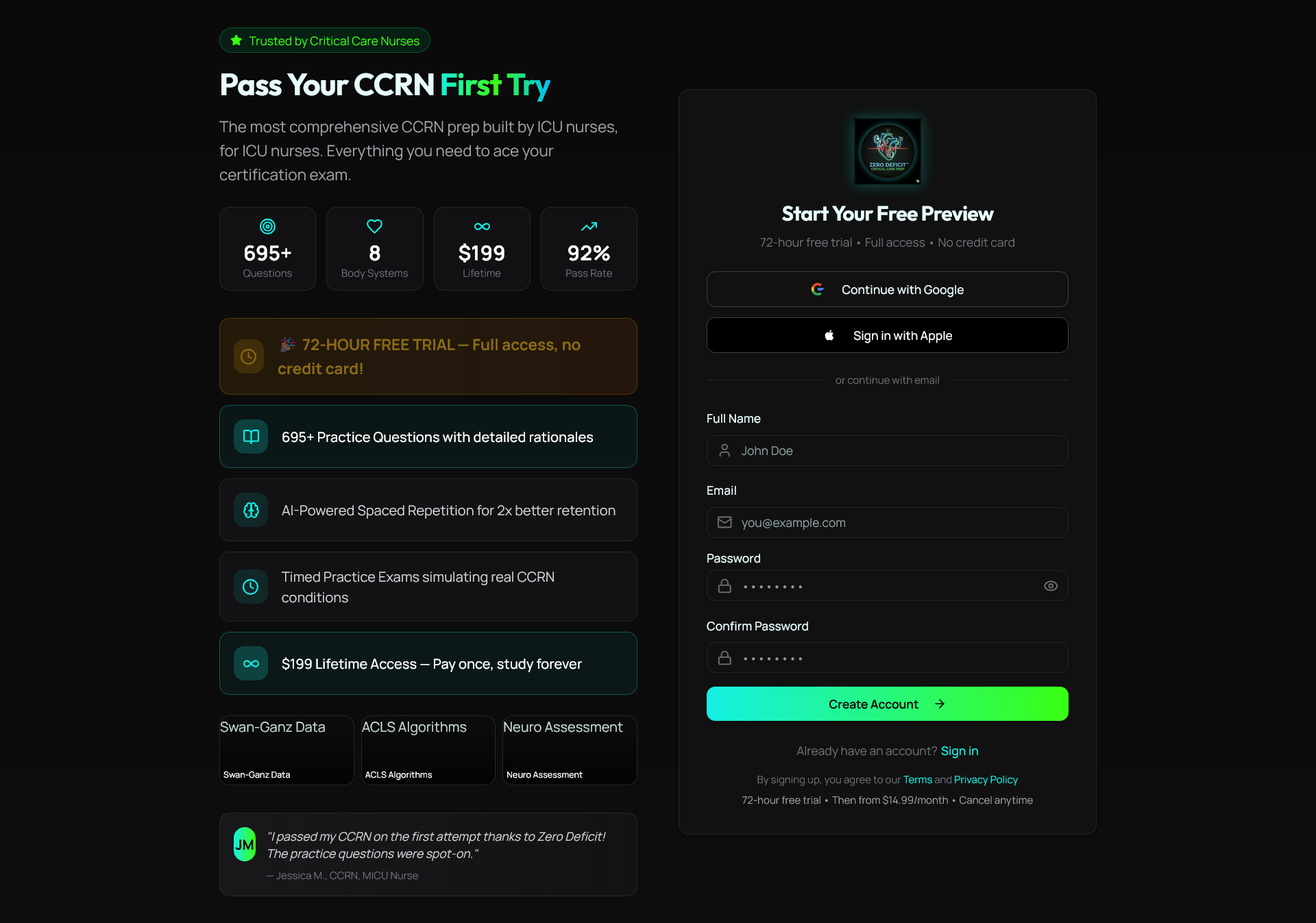
The platform includes a dedicated hematology practice quiz with rationales that covers every subtopic from the AACN blueprint: DIC, HIT, transfusion reactions, tumor lysis syndrome, anticoagulation reversal, and more. Each question comes with a detailed rationale explaining why the correct answer is right and why the distractors are wrong. That is the level of explanation that builds clinical judgment, not just test-taking luck. The full platform offers 695+ CCRN practice questions across all body systems, AI-powered personalized review, spaced repetition, and exam simulations. A free trial is available, and the premium question bank is where most nurses see the biggest score improvement. Start with the free hematology quiz and see exactly where your gaps are before test day.
Useful sources to bookmark
These are the primary references for your CCRN hematology prep. Bookmark them and check them directly rather than relying on secondary summaries.
- AACN CCRN Exam Handbook: The official blueprint document listing all testable hematology subtopics, domain cluster percentages, and exam structure. Available at aacn.org.
- AACN Adult CCRN Review Course Syllabus: Lists Module 9 (Hematology and Immunology) with all examable subtopics. Use it to confirm your checklist covers every listed item.
- Zerodeficitccrnprep Hematology Study Guide: System-specific guide mapping each hematology subtopic to examable actions and practice questions at zerodeficitccrnprep.com/study-guides/hematology/.
- Zerodeficitccrnprep Hematology Practice Quiz: Free quiz with rationales at zerodeficitccrnprep.com/practice-tests/hematology/.
- Guideline currency note: For clinical decisions on anticoagulation reversal and transfusion thresholds, prefer 2020+ guidelines from the American Society of Hematology (ASH), Society of Critical Care Medicine (SCCM), and American Heart Association (AHA). Check primary society guidance directly for the most current practice-level updates.
FAQ
What hematology topics are tested on the CCRN?
The AACN blueprint lists anemia, coagulopathies (DIC, ITP, HIT), myelosuppression (thrombocytopenia, neutropenia), oncologic complications (tumor lysis syndrome), and transfusion reactions (TRALI, TACO) as the core hematology and immunology subtopics.
How much of the CCRN exam is hematology?
Hematology is part of a broader domain cluster including Endocrine, Hematology/Immunology, GI, Renal/GU, and Integumentary systems that represents a significant portion of the exam. Hematology alone forms a smaller part of this cluster, but each question has equal point value to others on the CCRN exam.
What are the best resources for CCRN hematology review?
The AACN exam handbook and course syllabus are the authoritative starting points. For practice, Zerodeficitccrnprep offers a dedicated hematology quiz with rationales and a system-specific study guide that maps every subtopic to examable actions.
How many times can you retake the CCRN if you fail?
Per AACN policy, candidates can retake the CCRN up to four times within a 12-month period, with discounted retest fees potentially available.
What is the fastest way to improve on CCRN hematology questions?
Drill questions with detailed rationales and create two flashcards for every missed item: one for the core fact and one for the clinical application. Pattern recognition on lab clusters (DIC, tumor lysis, transfusion reactions) is the skill the exam tests most directly.
Recommended
Take a Hematology practice quiz
Test your DIC, transfusion, anticoagulation, and coagulopathy skills.
Get Your Free 20-Question CCRN Diagnostic
20 high-yield CCRN-style questions across every body system, with detailed rationales — emailed to you instantly.
No spam. One email + a couple of helpful follow-ups. Unsubscribe anytime.
Ready to pass your CCRN?
Join 12,000+ nurses using Zero Deficit — 695+ practice questions with rationales, AI-powered weak-area drilling, and spaced-repetition flashcards.
Start Free Trial →