Master Ventilator Modes for CCRN Candidates With 30 Second Waveform Drills
For CCRN success, you need to master one core split before anything else: volume-targeted versus pressure-targeted breaths. From there, six or seven modes cover nearly everything the exam asks. Know AC/VC, AC/PC, SIMV, PSV, PRVC (also called VC+), and APRV, and you can classify almost any ventilator question by mechanism alone. The sections below walk through settings, waveforms, and the drill-based study habits that turn this knowledge into points on test day.
TL;DR:
- Most ventilator questions focus on distinguishing modes by whether they guarantee volume or pressure, as this understanding simplifies classification.
- Volume control mode guarantees a set tidal volume but allows pressure to fluctuate, risking barotrauma if compliance worsens.
- Pressure control mode guarantees a set inspiratory pressure, with tidal volume dependent on lung compliance, requiring close monitoring of exhaled volume.
- Key modes include AC/VC, AC/PC, SIMV, PSV, PRVC, and APRV, each with specific clinical indications and ventilation mechanics.
- Mastery relies on recognizing waveforms, alarm limits, and patient conditions, using repeated drills and practice questions to improve pattern recognition.
Table of Contents
- Understanding Ventilator Modes CCRN Candidates Must Know: Control Variables Explained
- Common Ventilator Modes: What Each One Guarantees and When It’s Used
- Ventilator Settings and Target Ranges to Memorize
- How Do You Read Ventilator Waveforms on the CCRN?
- Bedside Troubleshooting: A Rapid-Action Checklist
- CCRN Study Strategies for Ventilator Mastery
- Indications and Contraindications by Mode
- Physiological Effects and Patient Interaction by Mode
- Weaning and Transitioning Between Modes
- Safety and Alarm Management Across Modes
- How Patient Conditions Change Mode Selection
- A Nurse’s Honest Take on Studying Ventilator Modes
- Zero Deficit CCRN Prep: Built for Ventilator and Waveform Mastery
- Sources
- FAQ
Understanding Ventilator Modes CCRN Candidates Must Know: Control Variables Explained
Every ventilator mode boils down to what the machine guarantees and what it lets vary. That’s the entire logic of the exam’s ventilator questions, and once it clicks, mode identification stops feeling like memorization.
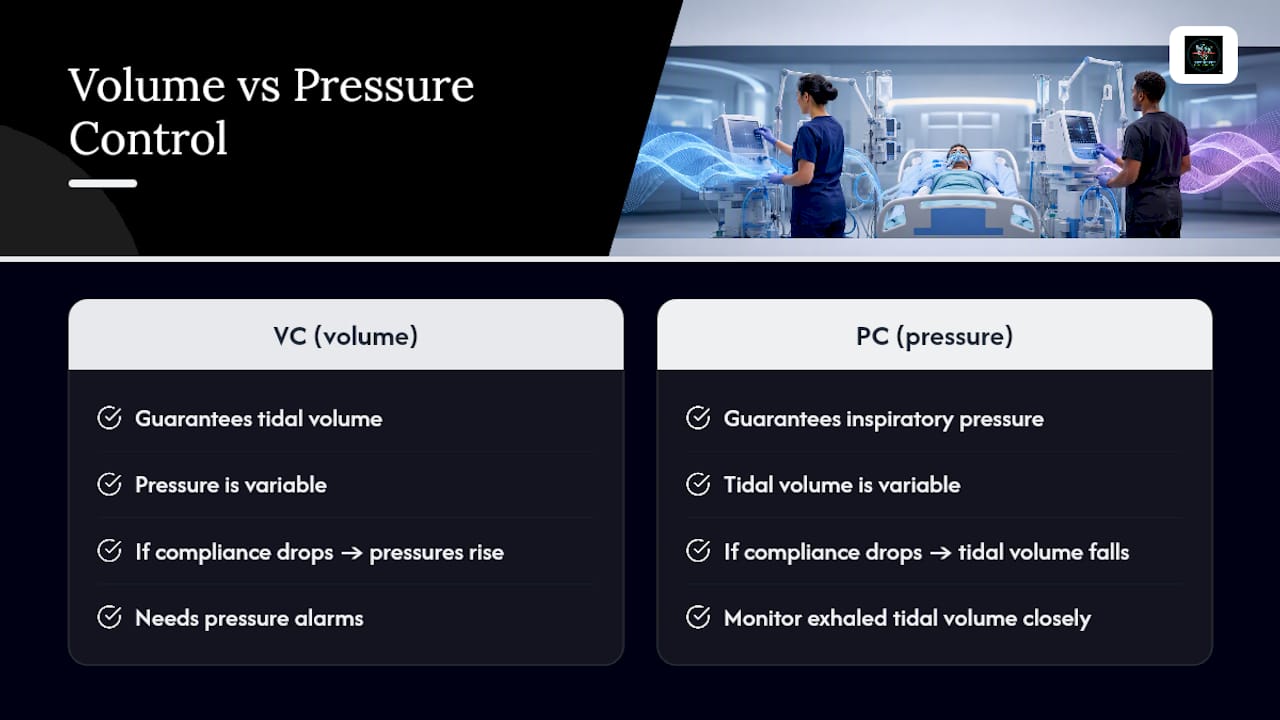
Volume control (VC) guarantees tidal volume. You set the VT, and the ventilator delivers it no matter what the lungs are doing. Pressure is the variable that moves. If the patient’s compliance drops (think worsening ARDS or a mucus plug), plateau and peak pressures climb to whatever it takes to push that volume in. That’s exactly why VC modes need pressure alarms guarding against barotrauma. Mechanisms and mechanical ventilation modes confirm this tradeoff directly: volume-controlled modes guarantee tidal volume while pressures fluctuate.
Pressure control (PC) flips the guarantee. You set an inspiratory pressure target, and volume becomes the dependent variable. If compliance improves, the patient gets more volume for the same pressure; if compliance worsens, volume drops. PC modes protect the lungs from a pressure spike, but they demand close monitoring of exhaled tidal volume, because nothing forces a minimum.
Layered on top of that split are the delivery categories: CMV/AC (every breath, whether patient-triggered or machine-triggered, gets a full supported breath), IMV/SIMV (mandatory breaths at a set rate, with spontaneous breaths in between that the patient does more work to generate), and CSV/spontaneous modes like PSV or CPAP, where the patient initiates and largely drives the breath. PEEP and pressure support ride on top of nearly all of these, which is why you’ll see combinations like “SIMV-VC with PSV and PEEP” in exam vignettes.
For lung-protective strategies in ARDS, most clinicians favor volume control specifically because it keeps tidal volume from creeping upward as compliance changes hour to hour.
Common Ventilator Modes: What Each One Guarantees and When It’s Used
Here’s the mode-by-mode breakdown you’ll actually be tested on, with the clinical logic behind each choice.
- AC/VC (Assist-Control, Volume Control). This is the workhorse mode for a freshly intubated, sedated patient. Every breath, patient-triggered or not, delivers the set tidal volume. If the patient is apneic, the ventilator time-triggers a backup breath at the set rate, which is one of the defining features of assist-control described in StatPearls’ overview of assist-control ventilation. Exam clue: look for a set VT, a set rate, and a plateau pressure number. If a vignette mentions rising peak pressure with steady plateau pressure, that’s a resistance problem (secretions, bronchospasm), tested constantly in AC/VC stems.
- AC/PC (Assist-Control, Pressure Control). Chosen when plateau pressures are already high or compliance is poor and the team wants to cap pressure exposure. Volume becomes the number you watch closely, because a stiffer lung means less volume delivered for the same set pressure. Exam clue: a set inspiratory pressure and PEEP, with tidal volume reported as the variable outcome, not the input.
- SIMV. Historically used as a weaning bridge, though it’s fallen out of favor for that purpose in some ICUs. SIMV delivers a set number of mandatory breaths (VC or PC) synchronized to the patient’s own effort, and lets spontaneous breaths in between get pressure support instead of a full mandatory breath. CCRN questions use SIMV to test your understanding that spontaneous breaths in this mode require more patient work than AC breaths.
- PSV/CPAP. Pure spontaneous-support modes. PSV augments every patient-initiated breath with a set pressure boost, which increases tidal volume and cuts work of breathing without dictating rate at all. CPAP applies constant pressure with no inspiratory boost. These show up on spontaneous breathing trials and weaning-readiness questions.
- PRVC/VC+ (dual or hybrid modes). These target a set tidal volume the way VC does, but deliver it using a pressure-limited breath that the ventilator adjusts breath-to-breath based on compliance. Reviews of dual-mode ventilation describe this hybrid approach as particularly useful when compliance is unstable, since it combines volume guarantee with pressure-limited delivery. Exam clue: any stem describing a mode that “guarantees volume but adjusts pressure automatically” is PRVC, not straight VC.
- APRV. A pressure-controlled mode using two pressure levels, mostly time-cycled, with a long high-pressure phase and brief pressure “releases.” It’s reserved for refractory hypoxemia when conventional modes aren’t recruiting the lung, and it appears on the exam as an advanced-rescue mode rather than a first-line choice.
Ventilator Settings and Target Ranges to Memorize
Numbers win points on the CCRN. You don’t need to memorize a textbook’s worth of physiology, but you do need the handful of values that show up over and over.
- Tidal volume: target 6 mL/kg predicted body weight for ARDS patients, per lung-protective ventilation guidance drawn from evidence reviews on protective ventilation strategies. This range reduces ventilator-associated lung injury and is one of the most heavily tested numbers in the pulmonary section.
- Respiratory rate: typically ordered between 12 and 20 breaths per minute for adults, adjusted based on minute ventilation and ABG results. Minute ventilation equals RR times VT, and questions often ask you to calculate it from those two inputs.
- FiO2: started high after intubation, then titrated down as tolerated, aiming for the lowest FiO2 that keeps SpO2 above roughly 92 to 96%, depending on the patient’s baseline and diagnosis.
- PEEP: commonly starts at 5 cm H2O and gets titrated upward in ARDS to improve oxygenation and recruit collapsed alveoli, often following a PEEP/FiO2 grid protocol.
- I:E ratio: normal is roughly 1:2, meaning expiration takes about twice as long as inspiration. Obstructive disease (COPD, asthma) often needs an even longer expiratory phase to prevent breath stacking.
Pro Tip: If a CCRN question gives you a tidal volume in mL without a body weight, calculate predicted body weight first. A 6 mL/kg order looks completely different for a 50 kg woman versus a 100 kg man, and exam writers use that gap to test whether you actually did the math.
Alarm limits matter just as much as the settings themselves. A high-pressure alarm triggers ventilator actions to protect the airway; a low exhaled volume alarm flags a leak or disconnection; an apnea alarm confirms the patient isn’t triggering breaths and the backup rate is taking over. According to AACN’s mechanical ventilation settings resource, a complete nurse-facing handoff always includes mode, rate, tidal volume, FiO2, PEEP, and pressure support, since these six values tell the next nurse everything about how the patient is being supported.
How Do You Read Ventilator Waveforms on the CCRN?
Waveforms are your first diagnostic tool at the bedside, often faster than waiting on an ABG. The exam tests three scalars (pressure, flow, and volume over time) and two loops (pressure-volume and flow-volume), and each one tells you something specific.
- Pressure scalar: A normal VC breath shows a steady rise to peak pressure, then a brief plateau if you’re checking static compliance. A spike in peak pressure with unchanged plateau pressure points to a resistance problem: secretions, bronchospasm, or a kinked tube. A rise in both peak and plateau together points to a compliance problem: worsening ARDS, pneumothorax, or abdominal distension.
- Flow scalar: Square wave flow (constant flow rate) is typical of VC; decelerating flow (high initial flow that tapers) is typical of PC and PRVC. Flow that doesn’t return to zero before the next breath starts is a hallmark of air trapping and auto-PEEP.
- Volume scalar: Should return to baseline after each breath. A volume trace that doesn’t return to zero usually signals a leak in the circuit or around the ETT cuff.
- PV and FV loops: A PV loop that flattens at the top (a “beak” shape) signals overdistension; a loop that leans right suggests decreased compliance. FV loops that don’t close indicate airflow obstruction, often from bronchospasm or airway secretions.
Asynchrony shows up as visual irregularities: double triggering (two breaths stacked with barely a pause between them, often from a VT set too low for patient demand), ineffective triggering (a flow or pressure dip that never quite triggers a breath), and auto-PEEP (flow that never returns to baseline before the next inspiration starts). Reviews of ventilator waveform interpretation note that catching these patterns early is essential for identifying patient-ventilator mismatch before it escalates into agitation, breath stacking, or barotrauma. Separately, clinical literature on asynchrony emphasizes that recognizing auto-PEEP on the flow scalar is one of the highest-yield bedside skills for critical care nurses, and it’s tested the same way on the exam.
Bedside Troubleshooting: A Rapid-Action Checklist
When an alarm fires, work outward in a fixed order: patient, then circuit, then ventilator. This sequence keeps you from chasing a vent setting while your patient is desaturating from a kinked tube.
- Patient first. Check work of breathing, color, chest rise, and vitals. Is the patient in distress, biting the tube, or fighting the vent?
- Circuit second. Rule out disconnection, a cuff leak, kinked tubing, or water in the circuit before touching a single setting.
- Ventilator third. Review current settings against recent orders. Did someone just change VT, PEEP, or trigger sensitivity?
Mode-specific patterns matter here. A high-pressure alarm on AC/VC usually means secretions, bronchospasm, or a pneumothorax, since the machine is fighting to hit that guaranteed volume against rising resistance. A sudden drop in tidal volume on PRVC often means compliance just worsened, because the pressure-limited breath can no longer deliver the target volume, and that’s a distinct clinical picture from the same drop happening on straight PC.
Know when to escalate. Suctioning, repositioning, and reassessing sedation are nursing-level interventions you can do immediately. Ventilator setting changes, new mode selection, and ABG-driven adjustments require respiratory therapy or the ordering provider, and CCRN questions frequently test whether you recognize that boundary.
Pro Tip: *When you call for help, lead with numbers, not adjectives.
CCRN Study Strategies for Ventilator Mastery
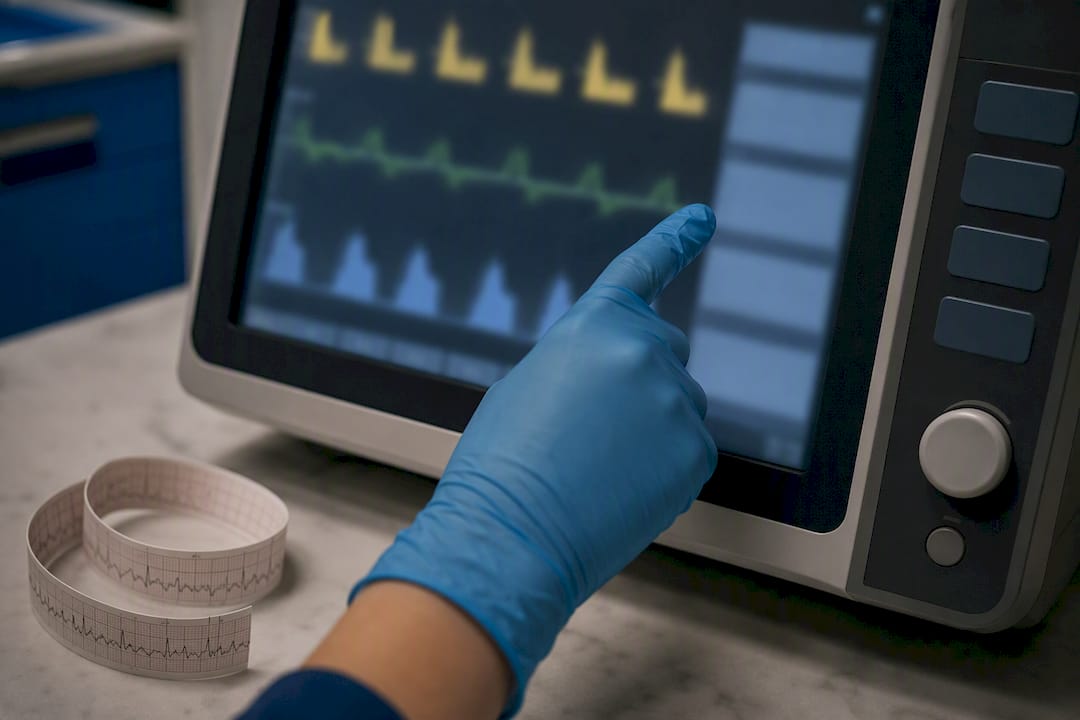
Waveform recognition improves fastest with short, repeated drills rather than long study marathons. Set aside ten waveform screenshots per session and time yourself: 30 seconds to identify the abnormality, 60 seconds to name three possible causes. This mirrors how the exam actually presents these questions, and it trains the pattern recognition that separates a confident answer from a guess.
Tag ventilator items you miss and revisit them on a spaced schedule (two days, then a week, then two weeks) rather than cramming them all at once. Because trigger mechanism (patient-triggered versus time-triggered) and asynchrony patterns account for most of the tricky exam stems, prioritize drilling those two areas over memorizing every possible setting combination.
Zero Deficit’s respiratory practice questions are built around exactly this workflow, with rationales that explain not just the right answer but why the distractors are wrong.
Indications and Contraindications by Mode
AC/VC fits nearly any newly intubated patient needing full ventilatory support, though it carries a real risk of breath stacking and air trapping in patients with severe airflow obstruction, since every triggered breath still delivers the full set volume. AC/PC is preferred when plateau pressures are already elevated or compliance is poor, but it requires close monitoring since volume isn’t guaranteed, and it’s a poor fit for a patient whose compliance is expected to swing wildly without frequent reassessment.
SIMV suits patients transitioning toward more spontaneous breathing, but using it as a primary support mode for a severely fatigued patient can increase work of breathing more than the patient can tolerate. PSV and CPAP are appropriate only for patients with reliable spontaneous respiratory drive; they’re contraindicated in anyone who is apneic, deeply sedated, or paralyzed, since nothing in these modes triggers a backup breath.
PRVC works well when compliance is unstable and the team wants volume assurance with pressure limitation, though it offers little advantage in a patient whose lungs are already stable. APRV is reserved for refractory hypoxemia unresponsive to conventional strategies. It’s generally avoided in patients with severe obstructive lung disease, since the prolonged high-pressure phase can worsen air trapping.
Physiological Effects and Patient Interaction by Mode
AC/VC and AC/PC both fully support every breath, which minimizes work of breathing but also means a heavily sedated patient does essentially no respiratory muscle work. Extended time on full support without any spontaneous breathing trials contributes to diaphragmatic weakness, which is part of why daily awakening and breathing trials matter so much in this population.
SIMV creates a mixed picture: mandatory breaths behave like AC breaths, but spontaneous breaths between them demand real patient effort, sometimes more than expected because the demand valve response isn’t instantaneous. PSV shifts almost all of the triggering and rate control to the patient, which improves synchrony and comfort for someone with intact respiratory drive but leaves a fatigued patient without a safety net if their effort drops.
PRVC’s breath-to-breath pressure adjustment means the patient may feel each breath slightly differently as compliance shifts, though most patients tolerate this well. APRV’s prolonged high-pressure phase with brief releases creates a very different breathing pattern from conventional modes. Patients often need heavier sedation to tolerate it comfortably, since spontaneous breathing on top of that pressure pattern feels unfamiliar to the respiratory drive.
Weaning and Transitioning Between Modes
Weaning generally starts with a spontaneous awakening trial paired with a spontaneous breathing trial, moving a patient from full support (AC/VC or AC/PC) toward a spontaneous mode like PSV or CPAP once they meet readiness criteria: adequate oxygenation on modest FiO2 and PEEP, hemodynamic stability, and the ability to protect their airway.
The typical progression looks like AC to PSV, with pressure support gradually reduced as tolerated, watched closely for signs the patient isn’t ready: rising respiratory rate, dropping tidal volume, tachycardia, or a climbing end-tidal CO2. SIMV was traditionally used as a stepwise weaning bridge, gradually lowering the mandatory rate, but many units now favor a more direct transition to PSV or daily SBTs instead, since it tends to shorten ventilator time.
Whatever the transition, watch the same core signs: work of breathing, rate, tidal volume, and mental status. A patient who looks comfortable and stable on minimal pressure support for 30 to 120 minutes is usually a strong extubation candidate, pending the standard airway and cough-strength checks.
Safety and Alarm Management Across Modes
Every mode carries its own alarm logic, and knowing which alarm matters most for which mode is a recurring exam theme. In VC modes, the high-pressure alarm is your primary safety net against barotrauma, since the machine will keep pushing to hit the set volume unless that alarm stops it. In PC modes, the low tidal volume alarm plays that same protective role, because nothing else forces a minimum volume when compliance drops.
Apnea alarms matter across every mode that allows spontaneous triggering, since they confirm the backup rate is engaging when a patient’s own drive fails. Low PEEP alarms flag circuit leaks or disconnections quickly, often before oxygen saturation even starts to drop.
Set alarm limits to match the clinical goal, not a default number. A patient on lung-protective ventilation for ARDS needs pressure alarms set tight enough to catch overdistension early, while a COPD patient prone to air trapping needs monitoring tuned to catch auto-PEEP before it silently builds. Reassess alarm limits every time you change a setting, not just at shift start, since a limit that made sense at the last setting change may not reflect the patient’s current status.
How Patient Conditions Change Mode Selection
COPD and other obstructive diseases change almost every ventilator decision. These patients need a longer expiratory time to fully exhale before the next breath, so I:E ratios get stretched and respiratory rates often run lower than you’d expect, specifically to prevent breath stacking and auto-PEEP. AC/VC still works, but settings get adjusted aggressively around that expiratory time, and PEEP is often added at a level just below the patient’s own intrinsic PEEP to reduce the work of triggering a breath.
Neuromuscular weakness (Guillain-Barré, myasthenic crisis, critical illness polyneuropathy) points toward full-support modes like AC/VC or AC/PC for as long as the underlying weakness persists, since these patients often can’t generate reliable spontaneous effort. Weaning has to wait for actual improvement in muscle strength, not just resolution of the original respiratory insult, which is a distinction CCRN vignettes test directly.
ARDS patients drive the lung-protective conversation: low tidal volumes, permissive hypercapnia, and PEEP titration take priority over comfort-driven settings, and refractory cases may escalate to APRV or prone positioning. Each of these patient populations changes the risk-benefit calculation on the same six or seven modes you already know, which is exactly why the control-variable framework matters more than memorizing settings in isolation.
A Nurse’s Honest Take on Studying Ventilator Modes
The most common mistake candidates make is mixing up what’s guaranteed and what’s variable, then trying to memorize settings without that anchor. The second is misreading flow waveforms under time pressure. The third is skipping waveform practice entirely because it feels harder than reading text. Fix all three with short, repeated drills instead of long review sessions, and work through Zero Deficit’s ventilator practice sets until the patterns feel automatic rather than memorized.
— Zero
Zero Deficit CCRN Prep: Built for Ventilator and Waveform Mastery
Zero Deficit™ gives you what a textbook can’t: over 695 practice questions with detailed rationales built specifically for how the CCRN actually tests ventilator content, including waveform recognition and mode-selection scenarios that trip up even experienced ICU nurses.
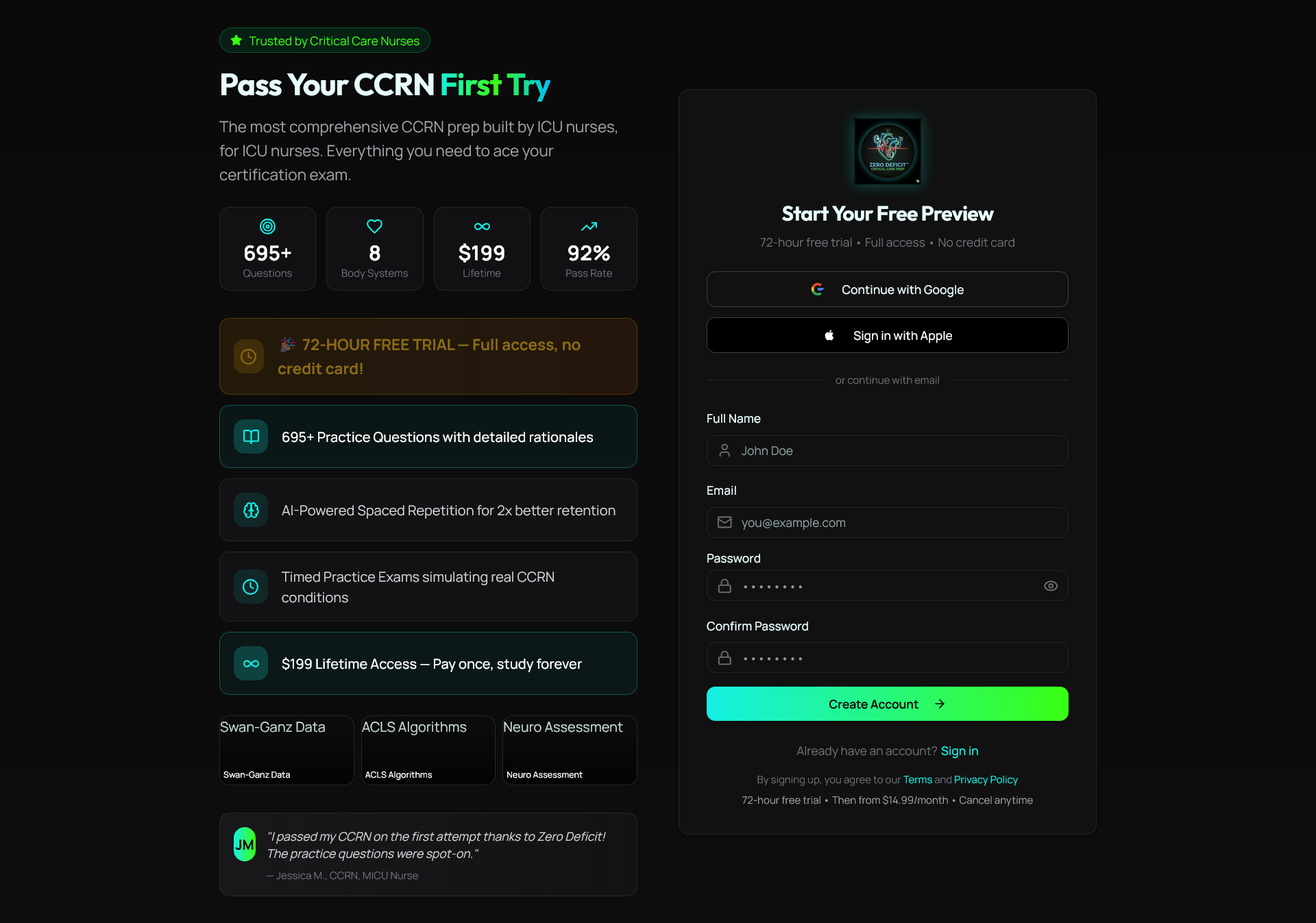
The recommended workflow is simple. Practice a focused set of ventilator questions, read every rationale (including the ones for answers you got right, since the reasoning matters more than the score), then retest on the items you missed a few days later using the platform’s spaced-repetition tagging. AI-powered review tools flag your weak areas automatically, so you’re not guessing which topics need another pass. The comprehensive respiratory study guide pairs directly with this practice, walking through ARDS, ABGs, and vent strategy in the same framework used above.
If you’re ready to turn this article into exam points, start with the 695+ CCRN practice questions and work the ventilator section first. That’s where a lot of candidates lose points they didn’t need to lose.
This article is general information, not a substitute for advice from a qualified doctor. Consult a qualified healthcare professional about your own circumstances before acting on anything here.
Sources
- Mechanisms and modes of mechanical ventilation (PubMed)
- Assist-Control Ventilation - StatPearls - NCBI Bookshelf
- Lung-protective ventilation evidence review (PMC)
- Mechanical Ventilation Settings - AACN
FAQ
What Are the Basic Modes of Ventilators?
The core modes are AC/VC, AC/PC, SIMV, PSV/CPAP, PRVC (VC+), and APRV, each defined by whether volume or pressure is the guaranteed variable and how much the patient contributes to triggering breaths.
What Ventilator Modes Do Nurses Need to Recognize at the Bedside?
ICU nurses most commonly manage AC/VC for newly intubated patients, SIMV or PSV during weaning, and occasionally APRV in refractory hypoxemia, watching settings and waveforms for signs of asynchrony or deterioration.
What Are the Main Types of Ventilation Used in the ICU?
ICU ventilation generally falls into four categories: full mandatory support (AC/VC, AC/PC), synchronized intermittent support (SIMV), spontaneous support (PSV, CPAP), and rescue strategies for refractory hypoxemia (APRV).
How Many Types of Ventilator Support Systems Exist?
There’s no single fixed number, since modes can be combined and modified, but CCRN prep typically groups them into the seven high-yield categories covered here: AC/VC, AC/PC, SIMV, PSV, CPAP, PRVC, and APRV.
What’s the Difference Between Volume Control and Pressure Control on the CCRN Exam?
Volume control guarantees tidal volume while pressure varies with lung mechanics; pressure control guarantees a set pressure while tidal volume varies, a distinction tested constantly across ventilator questions on the exam.
Recommended
Take a Respiratory practice quiz
Master ARDS, ventilation, ABGs, oxygenation, and pulmonary emergencies.
Get Your Free 20-Question CCRN Diagnostic
20 high-yield CCRN-style questions across every body system, with detailed rationales — emailed to you instantly.
No spam. One email + a couple of helpful follow-ups. Unsubscribe anytime.
Ready to pass your CCRN?
Join 12,000+ nurses using Zero Deficit — 695+ practice questions with rationales, AI-powered weak-area drilling, and spaced-repetition flashcards.
Start Free Trial →