Cardiac Nursing for the Adult CCRN: What You Must Know
TL;DR:
- Cardiac nursing involves managing adults with cardiovascular conditions across high-acuity settings, emphasizing hemodynamic monitoring and ECG interpretation. The CCRN exam tests core skills such as waveform analysis, vasoactive infusion titration, and high-yield conditions like shock and arrhythmias through vignette-based questions. Effective preparation requires integrated practice in decision-making, using scenario-based questions to master complex patient assessments and interventions.
Cardiac nursing is the specialized practice of assessing and managing adults with acute and chronic cardiovascular conditions across high-acuity settings. For the Adult CCRN, that means you need to own hemodynamic monitoring, 12-lead ECG interpretation, vasoactive and inotropic infusion titration, and defibrillation/cardioversion. The American Association of Critical-Care Nurses (AACN), the American Heart Association (AHA), and the ANCC all anchor the competency framework you’ll be tested on.
Table of Contents
- Where do cardiac nurses work, and what does the role look like?
- What core competencies does the Adult CCRN test in cardiac nursing?
- Which cardiac conditions appear most often on the Adult CCRN?
- How do cardiac topics map to the CCRN exam blueprint?
- How should you build a study plan for cardiac CCRN content?
- Essential hemodynamic targets and lab values to memorize
- Key Takeaways
- The cardiac section is where CCRN candidates lose the most points
- Zero Deficit™ CCRN Prep covers every cardiac topic you just read about
- Useful sources for cardiac CCRN study
- FAQ
Where do cardiac nurses work, and what does the role look like?
Cardiac nurses practice across a wide range of critical and acute care environments. Knowing which setting demands which skill set helps you prioritize your CCRN study.
- Cardiovascular ICU (CVICU): Post-cardiac surgery patients, IABP/VAD management, continuous invasive hemodynamic monitoring, and complex vasoactive drip titration.
- Cardiac Care Unit (CCU): ACS, cardiogenic shock, acute decompensated heart failure, continuous telemetry, and antiarrhythmic infusions.
- Cardiac catheterization lab: Pre- and post-procedure monitoring, contrast reaction management, arterial sheath care, and anticoagulation reversal.
- Post-op cardiac surgery unit: Chest-tube management, early extubation protocols, bleeding surveillance, and pacing wire care.
- Cardiac step-down/telemetry: Rhythm surveillance, anticoagulation education, and transition-of-care planning.
Safety responsibilities unique to cardiac patients cut across all of these settings. Alarm triage is not passive: you must distinguish artifact from true dysrhythmia and escalate when trends signal impending deterioration, not after it arrives. Anticoagulation monitoring, line and tube integrity, and family education round out the daily scope. Cardiovascular nursing is also expanding toward multidisciplinary care leadership, with nurses increasingly responsible for coordinating the full care continuum.

What core competencies does the Adult CCRN test in cardiac nursing?
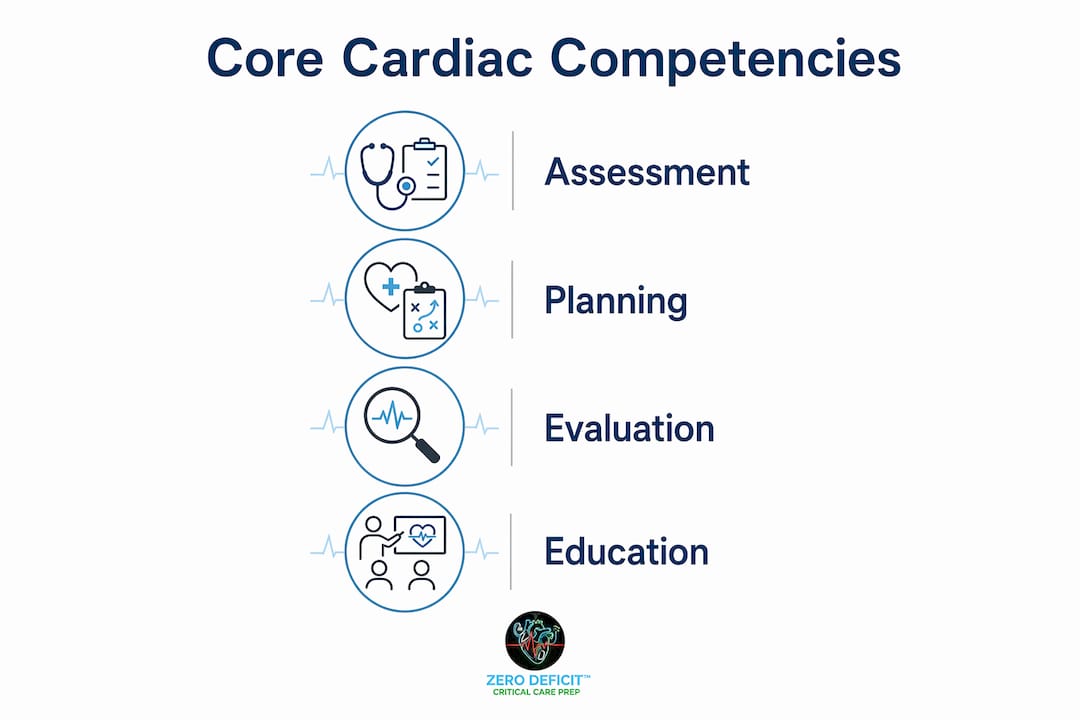
The ANCC Cardiac-Vascular Role Delineation Study organizes practice into four domains: assessment and diagnosis; planning and implementation; evaluation and modification; and patient and community education. Every technical skill below maps to at least one of those domains.
| Competency | CCRN Exam Relevance | Best Study Method |
|---|---|---|
| Invasive hemodynamic monitoring (CVP, arterial line, PA catheter basics) | High | Case vignettes + waveform drills |
| 12-lead ECG and rhythm interpretation | High | Daily rhythm strips + practice questions |
| Defibrillation/cardioversion | High | Scenario practice + ACLS algorithm review |
| Vasoactive/inotropic infusion titration | High | Pharmacology practice questions |
| IABP/VAD basics | Medium | Targeted reading + case vignettes |
| Chest-tube and post-op cardiac care | Medium | Skill lab + scenario practice |
| Patient and family education | Medium | Vignette-based decision-making |
| Alarm triage and artifact recognition | Medium | Simulation + rhythm drills |
Pro Tip: Don’t memorize normal hemodynamic values in isolation. Train yourself to ask “why is this number changing?” — synthesizing CVP trends, cardiac index, and clinical context together is what CCRN vignettes actually test, and it’s the difference between a competent answer and the correct one.
Which cardiac conditions appear most often on the Adult CCRN?
These are the diagnoses you must be able to reason through, not just recognize:
- ACS/MI: ST-segment changes, troponin trends, antiplatelet and anticoagulant management, reperfusion timing.
- Cardiogenic shock: Low cardiac output with elevated filling pressures; vasopressor choice (norepinephrine first-line per current AHA/ACC guidance), inotrope selection (dobutamine), and when to escalate to mechanical support.
- Dysrhythmias: VT/VF (immediate defibrillation, ACLS algorithm), SVT (vagal maneuvers, adenosine), bradyarrhythmias and heart block (atropine, transcutaneous pacing, transvenous pacing indications).
- Acute decompensated heart failure: Volume status assessment, diuresis titration, BiPAP considerations, and afterload reduction.
- Pericardial tamponade: Beck’s triad, pulsus paradoxus, equalization of pressures on hemodynamic monitoring, and pericardiocentesis preparation.
- Post-op cardiac surgery complications: Cardiac tamponade, low-output syndrome, atrial fibrillation, sternal wound issues, and pacing wire management.
- Pulmonary embolism with RV strain: Right heart strain on ECG (S1Q3T3), RV dilation on echo, anticoagulation, and thrombolysis decision points.
- Device-related emergencies: IABP timing errors, VAD alarms, and ICD/pacemaker malfunction.
For cardiogenic shock management, the core CCRN decision point is matching the hemodynamic profile to the right intervention before the patient decompensates further.
Know your cardiac medications beyond pressors. Anticoagulants (heparin, bivalirudin, enoxaparin), antiplatelets (aspirin, P2Y12 inhibitors), antiarrhythmics (amiodarone, lidocaine, adenosine, beta-blockers), and analgesia/sedation considerations in the hemodynamically unstable patient are all fair game on the exam. Knowing the mechanism, monitoring parameters, and reversal agents for each class is non-optional.
How do cardiac topics map to the CCRN exam blueprint?
The ANCC competency domains are the lens through which every CCRN item is written. Here’s how cardiac content fits:
Assessment and diagnosis covers the highest-yield cardiac topics: hemodynamic interpretation, 12-lead ECG analysis, dysrhythmia recognition, and physical assessment findings in shock or tamponade. These appear most frequently in the exam’s vignette-driven items.
Planning and implementation tests your ability to select the right intervention: which vasopressor, which antiarrhythmic, when to cardiovert versus defibrillate, and how to titrate a drip based on a changing hemodynamic picture.
Evaluation and modification asks whether the intervention worked. Expect questions about reassessing MAP after a norepinephrine dose change, interpreting a post-cardioversion rhythm, or recognizing that a patient’s worsening lactate means the current plan needs to change.
Patient and community education shows up in discharge-readiness and medication-teaching scenarios. The Synergy Model underpins this domain: match your intervention to the patient’s complexity and vulnerability, not just the diagnosis.
A practical approach: convert each domain into three to five learning objectives, then pull practice questions specifically targeting those objectives. That structure keeps your study time tied directly to exam weight.
How should you build a study plan for cardiac CCRN content?
A focused six-to-eight week cardiac block works well when structured around active retrieval, not passive reading.
- Week 1: Baseline assessment. Complete a timed 30-question cardiac block, review every rationale, and identify your weakest sub-topic (hemodynamics, ECG, pharmacology, or shock).
- Week 2: Hemodynamics deep-dive. Daily waveform interpretation drills, CVP and arterial line waveform review, and 15 targeted practice questions per session.
- Week 3: ECG and rhythm mastery. Rhythm strip drills every morning (10 strips minimum), followed by practice questions pairing rhythm findings with clinical decisions.
- Week 4: Pharmacology block. Vasoactives, inotropes, antiarrhythmics, and anticoagulants. Use spaced-repetition flashcards for mechanism, dose range, and monitoring parameters.
- Week 5: High-yield conditions. Work through ACS, cardiogenic shock, tamponade, and post-op complications using clinical vignettes that force decision-making under time pressure.
- Week 6: Mixed interleaving. Alternate ECG strips, hemodynamic scenarios, and pharmacology questions in the same session to build the pattern-switching the exam demands.
- Week 7: Full-length timed practice test. Simulate exam conditions. Review every missed item the same day.
- Week 8: Targeted review of persistent weak spots, guideline updates (AHA/ACC ACS and resuscitation), and a final exam-day checklist review.
Pro Tip: Interleaving ECG interpretation, hemodynamic scenarios, and pharmacology in a single study session feels harder than blocked practice — and that’s exactly why it works. The retrieval difficulty is what builds durable retention for exam day.
Adaptive study methods that adjust question difficulty based on your performance accelerate this process by keeping you in the productive struggle zone rather than reviewing material you already know.
Essential hemodynamic targets and lab values to memorize
| Parameter | Normal / Target Range | Clinical Note |
|---|---|---|
| MAP | — | Target MAP in cardiogenic shock; may need higher in chronic hypertension |
| SBP | — | SBP <90 mmHg triggers shock assessment |
| CVP | 2–8 mmHg | Elevated in tamponade, RV failure; low in hypovolemia |
| PAOP/PCWP | 8–12 mmHg | Elevated value suggests left heart failure/pulmonary edema |
| Cardiac Index | — | <2.2 L/min/m² indicates low output state |
| Lactate | Below normal threshold | Rising lactate = inadequate perfusion; trend matters as much as single value |
| Potassium (K+) | — | Hypokalemia and hyperkalemia both increase dysrhythmia risk |
| Magnesium (Mg²+) | — | Hypomagnesemia potentiates torsades; replace before antiarrhythmics |
Immediate intervention triggers:
- VF/pulseless VT: Defibrillate immediately (unsynchronized, 200J biphasic); initiate ACLS algorithm; epinephrine 1 mg IV every 3–5 minutes; amiodarone 300 mg IV for refractory VF/VT.
- Symptomatic bradycardia (HR <60 with hypotension, altered mental status, or chest pain): Atropine 0.5 mg IV (repeat to 3 mg total); transcutaneous pacing if atropine fails; prepare for transvenous pacing.
- Pericardial tamponade: Position upright, IV fluid bolus for preload support, prepare for emergent pericardiocentesis, avoid positive pressure ventilation if possible.
Key Takeaways
Cardiac nursing competency for the Adult CCRN requires mastering hemodynamic interpretation, ECG analysis, vasoactive titration, and high-yield condition management across the four ANCC competency domains.
| Point | Details |
|---|---|
| Prioritize hemodynamics | Interpret CVP, cardiac index, and PAOP together in clinical context, not as isolated numbers. |
| Master ECG patterns daily | Ten rhythm strips per day during your study block builds the pattern recognition the exam tests. |
| Know your drip logic | For each vasoactive and inotropic agent, know mechanism, titration endpoint, and monitoring parameters. |
| Practice vignette decisions | CCRN items test what you do next, not just what you recognize; use timed scenario practice every week. |
| Use Zerodeficitccrnprep | Over 695 practice questions with detailed rationales and spaced-repetition flashcards target cardiac content directly. |
The cardiac section is where CCRN candidates lose the most points
Most nurses who retake the CCRN tell the same story: they felt confident about the content but froze on the hemodynamic vignettes. The problem isn’t knowledge gaps — it’s that they studied cardiac topics in isolation instead of practicing the integrated decision-making the exam actually demands. Hemodynamics, ECG findings, and pharmacology don’t appear as separate questions on test day. They show up together in a single patient scenario, and you have 90 seconds to sort it out.
The Synergy Model is the frame that fixes this. When you evaluate patient vulnerability and stability first, the right intervention becomes clearer because you’re matching nurse competency to patient need, not just pattern-matching a diagnosis to a drug. That shift in thinking is what separates a passing score from a near-miss.
Zero Deficit™ CCRN Prep covers every cardiac topic you just read about
Cardiac content is the highest-stakes section of the Adult CCRN, and generic study materials rarely go deep enough on hemodynamic interpretation or drip titration logic. Zerodeficitccrnprep was built by ICU nurses specifically for this exam, with 695+ CCRN practice questions that include detailed rationales explaining the clinical reasoning behind every answer, not just the correct choice.
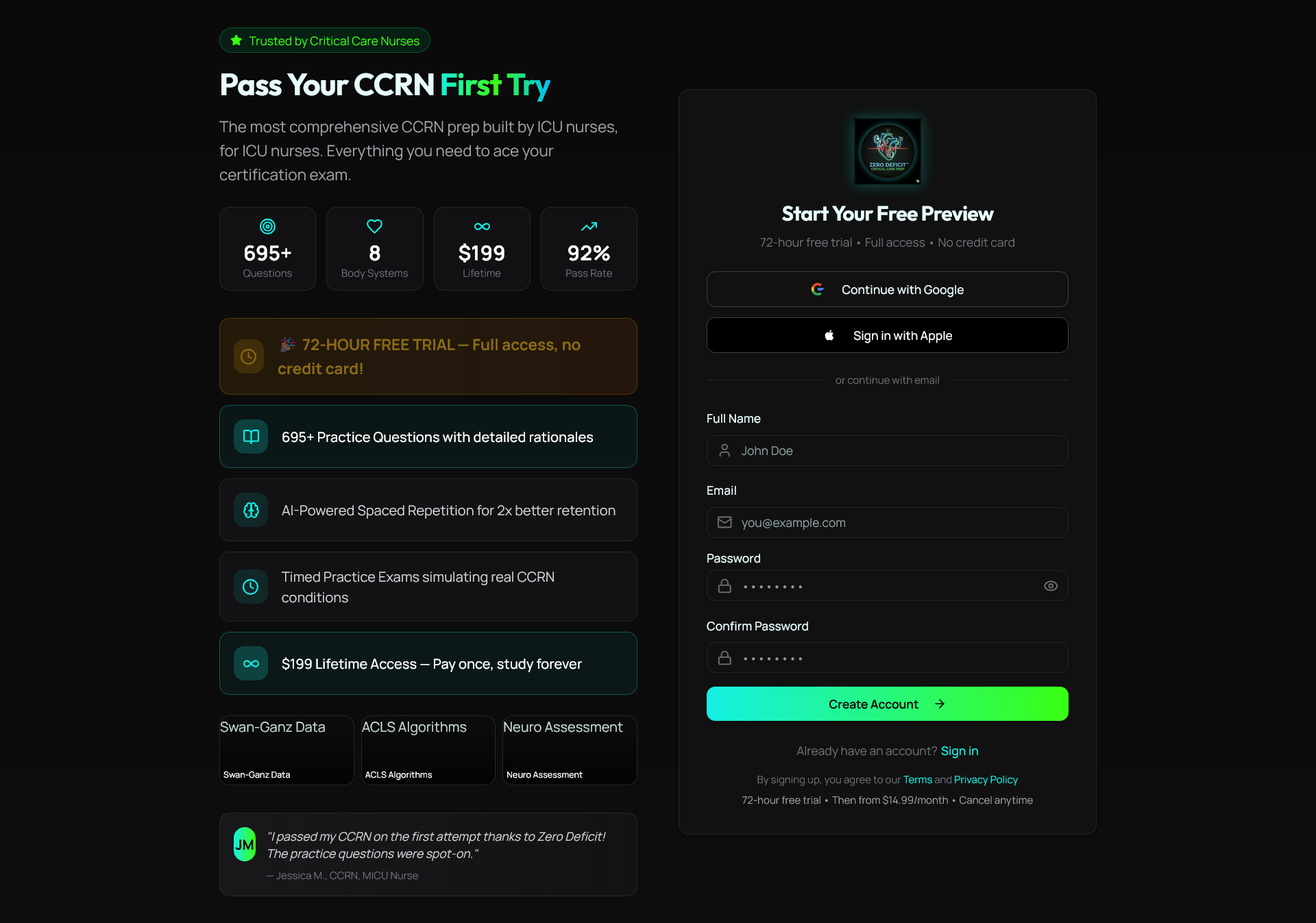
The platform pairs spaced-repetition flashcards, waveform and ECG practice, and timed full-length practice tests with high-yield cardiac topic guides covering shock, vasopressors, ACS, dysrhythmias, and post-op care. AI-powered review tools personalize your question feed based on where you’re weakest, so you spend your study hours on the content that moves your score. Start your free trial at Zerodeficitccrnprep.com and work through your first cardiac question block today.
Useful sources for cardiac CCRN study
- ANCC Cardiac-Vascular Nursing Role Delineation Study: Primary source for competency domains and exam blueprint alignment; read this before you build your study plan.
- AHA/ACC ACS Guidelines (2021+): Authoritative source for STEMI/NSTEMI management, antiplatelet/anticoagulant protocols, and reperfusion decision trees.
- AHA ACLS Guidelines (2020+): VF/VT algorithm, bradyarrhythmia management, and post-cardiac arrest care; know these cold.
- SCCM Critical Care Medicine position statements: Hemodynamic monitoring, vasopressor use in shock, and sepsis/cardiogenic shock differentiation.
- NurseJournal.org cardiac nurse career overview: Practical overview of alarm management and clinical scope; useful for grounding technical study in real practice.
FAQ
What is cardiac nursing in the context of the Adult CCRN?
Cardiac nursing is the specialized critical-care practice of assessing and managing adults with acute cardiovascular conditions; for the CCRN, it covers hemodynamics, ECG interpretation, vasoactive infusions, and high-acuity conditions like ACS, cardiogenic shock, and dysrhythmias.
Which cardiac topics carry the most weight on the CCRN exam?
Hemodynamic monitoring, dysrhythmia recognition, shock management, and ACS are the highest-yield cardiac topics, appearing most often as vignette-driven decision-making items per the ANCC competency framework.
What ANCC competency domains cover cardiac nursing?
The four domains are assessment and diagnosis, planning and implementation, evaluation and modification, and patient and community education; cardiac topics appear across all four, with hemodynamics and dysrhythmias concentrated in assessment and planning.
How many practice questions should I do for cardiac CCRN prep?
There is no single published minimum, but structured study blocks of 15–30 targeted cardiac questions per session, reviewed with full rationales, build the pattern recognition and decision-making speed the exam requires.
How does Zerodeficitccrnprep support cardiac CCRN study?
Zerodeficitccrnprep offers over 695 practice questions with detailed rationales, spaced-repetition flashcards, and high-yield cardiac topic guides built by ICU nurses, covering every major cardiovascular domain tested on the Adult CCRN.
Recommended
- Pass the CCRN Exam: Proven Guide for Critical Care Nurses | Zero Deficit CCRN Prep
- Types of Critical Care Certifications: Your 2026 Guide | Zero Deficit CCRN Prep
- Reading ECGs for CCRN: Your Complete Exam Guide | Zero Deficit CCRN Prep
- Top CCRN study topics to master for exam success | Zero Deficit CCRN Prep
Take a Cardiovascular practice quiz
Test your mastery of hemodynamics, ACLS, MI, arrhythmias, and heart failure.
Get Your Free 20-Question CCRN Diagnostic
20 high-yield CCRN-style questions across every body system, with detailed rationales — emailed to you instantly.
No spam. One email + a couple of helpful follow-ups. Unsubscribe anytime.
Ready to pass your CCRN?
Join 12,000+ nurses using Zero Deficit — 695+ practice questions with rationales, AI-powered weak-area drilling, and spaced-repetition flashcards.
Start Free Trial →