60–75 Question Diagnostic: System Based CCRN Practice for ICU Nurses
This page organizes CCRN practice by body system so you can drill exactly where you’re weak instead of rereading everything. Zero Deficit™ maps its practice questions and study guides to the current AACN test plan, with a free quiz for each system. If you’re not sure where to start, take a 60 to 75 question diagnostic first, then head straight to the quiz for whichever system gave you the most trouble.
TL;DR:
- Study time should be allocated according to the current AACN exam weights, with about 2 to 2.5 hours weekly dedicated to cardiovascular content.
- Key numbers for cardiovascular are CVP 2-6 mmHg, PAP 15-25/8-15 mmHg, and CO 4-8 L/min, with shock identification relying heavily on these hemodynamic signatures.
- Respiratory questions focus on ARDS criteria, low tidal volume ventilation, and ventilator alarm responses, requiring familiarity with PaO2/FiO2 ratios and ABG interpretation.
- Multisystem and neurological questions now emphasize sepsis management, organ failure progression, and CPP calculation, with stroke and seizure protocols also frequently tested.
- Spaced retrieval retesting within one week after initial studying is crucial to reinforce learning and identify ongoing knowledge gaps effectively.
Table of Contents
- Why Study CCRN Practice by System?
- What Are the High-Yield Topics in Each CCRN System?
- How Should You Structure Your CCRN Study Sessions?
- A Nurse’s Honest Take on CCRN Prep Timelines
- Turn System Practice Into a Full CCRN Study Plan
- Sources
- FAQ
Why Study CCRN Practice by System?
The CCRN exam tests a set number of items in 3 hours, and every one of them maps back to a specific weighted category in the AACN exam handbook. Of those a set number of items, 125 count toward your score and 25 are unscored pretest questions you can’t identify during the exam. Every question, scored or not, falls under the same a split where clinical judgment covers the majority and professional caring covers a significant minority.
That structure is the whole reason system-by-system practice works better than generic question dumps. The AACN itself recommends building your study time around the official test-plan weights and using practice exams that mirror those proportions, rather than just answering random questions until you feel tired.
A November 2025 revision shifted those weights. Cardiovascular and respiratory both dropped in share, while musculoskeletal/neurological/behavioral and multisystem problems grew, according to a breakdown of the 2025 exam changes. If you’re studying from an older guide or a nursing school friend’s notes from two years ago, you’re likely overweighting cardiac and underweighting neuro and multisystem, which is exactly backwards from where the exam is heading.
Here’s a working allocation based on the current weights, assuming roughly 10 hours of weekly study:
- Cardiovascular: highest single share, but no longer the majority of your hours. Roughly 2 to 2.5 hours weekly.
- Respiratory: second-largest share. Roughly around one to two hours weekly.
- Multisystem and neurological/musculoskeletal/behavioral: now larger shares than before the revision. Budget a couple of hours weekly combined.
- Renal, endocrine, GI, and hematology/immunology: smaller individual shares, but they show up constantly in multisystem stems. Budget some weekly time combined.
- Professional Caring and Ethical Practice: 20% of the whole exam. Don’t skip it. Budget 1 hour weekly.
Pro Tip: Don’t guess at the current weights from a study guide you bought last year. Pull the actual percentages from the current handbook before you build your weekly schedule, because a stale weight table will misallocate your hours all the way to test day.
The math is simple once you see it: if a domain makes up a smaller share of the exam than you’re spending time on, you’re trading points you could be earning elsewhere. Rebalance your hours to match the current blueprint, not the one you remember.
What Are the High-Yield Topics in Each CCRN System?
Every system on the CCRN has a handful of numbers and decision rules that generate most of its questions. Below is what actually shows up, organized the way Zero Deficit™'s study guides break it down.
1. Cardiovascular: hemodynamics and shock
This is still the system with the most tested content, even after the 2025 rebalancing. You need these numbers cold, not looked up:
- CVP: 2 to 6 mmHg
- Pulmonary artery pressure (PAP): 15 to 25 mmHg systolic / 8 to 15 mmHg diastolic
- Pulmonary capillary wedge pressure (PCWP): 4 to 12 mmHg
- Cardiac output (CO): 4 to 8 L/min
- Cardiac index (CI): 2.5 to 4 L/min/m²
- Systemic vascular resistance (SVR): 800 to 1,200 dynes/sec/cm⁻⁵
CCRN stems love the shock ladder: hypovolemic, cardiogenic, obstructive, and distributive shock each have a distinct hemodynamic signature, and the exam expects you to identify the type from numbers alone, not from a diagnosis handed to you in the stem. A patient with low CO, high SVR, and high PCWP is in cardiogenic shock. Swap the SVR and PCWP to low, and you’re looking at distributive shock instead.
Pressor priority questions are common too. Know your first-line agents for each shock type (norepinephrine for distributive, dobutamine or milrinone considerations for cardiogenic with adequate pressure) and understand why you’d add a second agent rather than just increasing the dose of the first. If you’re rusty on hemodynamics specifically, the cardiovascular practice quiz drills these scenarios with rationales attached to every wrong answer, not just the right one.
2. Respiratory: ARDS, ventilators, and gas exchange
ARDS questions hinge on the Berlin criteria: onset within one week of a known clinical insult, bilateral opacities not fully explained by fluid overload or cardiac failure, and a PaO2/FiO2 ratio criteria used to define increasing severity levels of ARDS.
Low tidal volume ventilation is the other pillar. You should know that plateau pressure targets to protect lungs typically stay below certain safe thresholds to protect the lung, and that tidal volumes run 4 to 8 mL/kg of predicted body weight, not actual body weight. Questions will test whether you can tell the difference between an oxygenation problem and a ventilation problem: oxygenation issues get fixed with FiO2 or PEEP adjustments, ventilation issues get fixed with rate or tidal volume changes.
Ventilator alarm triage is a recurring stem type. When a high-pressure alarm sounds, check for obstruction, biting, secretions, or pneumothorax before you touch the settings. When a low-pressure alarm sounds, check for a disconnect or cuff leak first. The respiratory practice quiz walks through both alarm types and several ABG interpretation scenarios you’ll see phrased almost identically on exam day.

3. Multisystem: sepsis and MODS
Multisystem questions gained weight in the 2025 revision, and sepsis is the anchor topic here. Know the Hour-1 bundle: measure lactate, obtain blood cultures before antibiotics, give broad-spectrum antibiotics, start fluids generally administered in response to hypotension or elevated lactate levels, following guidelines, and add vasopressors if the patient stays hypotensive during or after fluid resuscitation to maintain a MAP of 65 mmHg or higher.
MODS stems usually present as a patient failing in sequence: respiratory failure, then renal decline, then coagulopathy. You’re expected to triage which organ system needs intervention first based on the numbers given, not just list all the problems. A patient with rising creatinine, falling platelets, and worsening PaO2/FiO2 is telling you the story of progressive organ failure, and the correct answer usually addresses the most immediately life-threatening piece first, typically airway or oxygenation.
4. Neurological: ICP, CPP, and stroke windows
The core equation you need automatic recall on: CPP = MAP − ICP. Normal ICP sits under 15 mmHg, and you generally want CPP usually targeted within a specific range to ensure adequate brain perfusion. A patient with a MAP of 90 and an ICP of 25 has a CPP of 65, which is adequate. Change the ICP to 35, and CPP drops to 55, which is a problem.
Stroke questions test door-to-needle windows for tPA (within 4.5 hours of symptom onset for eligible patients) and the recognition that a “stroke-like” presentation in a sedated patient can be sedation masking a real neuro change rather than artifact. Status epilepticus pearls show up too: seizure activity lasting 5 minutes or longer, or recurrent seizures without return to baseline between them, meets the definition and needs immediate treatment, not a “wait and see” approach.
If neuro is your weak spot, and for a lot of ICU RNs coming from med sure or cardiac backgrounds it is, the neurology practice quiz is worth running early in your prep, since this domain’s share grew under the current test plan.
5. Renal and genitourinary: AKI and CRRT
AKI staging (by KDIGO criteria) hinges on creatinine rise and urine output thresholds, and CCRN stems test whether you can stage a patient from lab trends rather than a label in the chart. CRRT trigger questions ask you to recognize when a patient has crossed from “manage medically” to “needs renal replacement”: refractory volume overload, severe electrolyte derangement (especially hyperkalemia unresponsive to medical management), or uncontrolled acidosis.
Sodium correction limits get tested because getting them wrong causes real harm. Correcting chronic hyponatremia too fast risks osmotic demyelination syndrome, so the safe correction rate is capped, generally not exceeding 8 mEq/L in 24 hours in most guideline-based approaches. The renal practice quiz covers AKI staging scenarios alongside CRRT initiation triggers.
6. Endocrine emergencies
DKA and HHS questions test whether you know the treatment sequence: fluids first, then insulin, then electrolyte correction, specifically checking potassium before starting insulin since insulin drives potassium into cells and can precipitate dangerous hypokalemia if the starting level is already low or normal.
Adrenal crisis red flags include refractory hypotension unresponsive to fluids and pressors plus unexplained hypoglycemia. Thyroid storm presents with severe tachycardia, hyperthermia, and altered mental status, and the CCRN wants you to recognize it as a medical emergency requiring immediate treatment, not just “hyperthyroidism, mild.”
7. GI and hematology/immunology
Transfusion reaction questions test your ability to distinguish types fast: febrile nonhemolytic reactions cause fever without hemodynamic collapse, while acute hemolytic reactions cause fever plus hypotension, back pain, and hemoglobinuria, and demand you stop the transfusion immediately. Massive GI bleed triage stems test airway protection, large-bore IV access, and blood product ratios before they test anything about the endoscopy plan.
8. Musculoskeletal, integumentary, and behavioral/psychosocial
These smaller-share categories rarely anchor a whole question on their own. They usually show up embedded inside multisystem stems, such as skin breakdown risk in a prolonged ICU stay or withdrawal management complicating a ventilator wean. Don’t spend disproportionate hours here, but don’t skip them either, since the exam has increased attention on musculoskeletal and behavioral content under the current weights.
9. Professional caring and ethical practice
This 20% chunk of the exam tests Synergy Model application: matching nurse competencies to patient and family needs, advocacy in end-of-life situations, and recognizing moral distress versus a genuine ethical conflict. These questions read like scenario-based judgment calls rather than facts to memorize.
How Should You Structure Your CCRN Study Sessions?
Random review sessions feel productive but rarely move your score. A structured study blueprint that starts with a diagnostic and then builds decision-framework practice produces faster gains than open-ended studying, and the workflow below follows that model.
Start with a real diagnostic
Take 60 to 75 mixed items under actual timed conditions, not untimed and not with notes open. As you go, log every miss into one of three buckets: knowledge gap, misread the stem, or pacing pressure caused a rushed guess. This single step tells you more about where to spend your next two weeks than any study guide table of contents. A free system-indexed practice test can serve this purpose if you want per-category scoring without committing to a full program yet.
For every miss, write a one-line decision rule in your own words. Not “review shock” but “if SVR is low and CO is normal or high, think distributive before cardiogenic.” Specific rules like this transfer to the exam room; vague topic labels don’t.
Build your weekly loop
- Early week: one or two focused system sessions (45 to 60 minutes each) targeting your diagnostic’s weakest categories.
- Midweek: two mixed timed blocks of 25 to 40 questions each, pulling from multiple systems at once.
- End of week: one full-length timed block (75 to 100 questions) that simulates real pacing pressure.
Mixed timed blocks matter more than most candidates think. Studying one system in isolation feels productive, but the real exam jumps between cardiac, renal, and ethics questions with no warning, and that context-switching is its own skill. Scheduling deliberate mixed blocks during weeks two through six of your prep exposes decision-flow weaknesses that single-system drilling hides.
Use a two-pass answering technique
On your first pass through any timed block, answer every question you’re confident about and flag the ones that make you hesitate. Don’t linger. On your second pass, return to flagged items with fresh eyes. This prevents the common trap of burning 90 seconds on question 12 and then rushing through questions 40 to 50 at the end.
Build in a short micro-reset after any question that rattles you: three seconds, a breath, move on. Cascading answer changes, where one hard question bleeds panic into the next five, are one of the most common self-inflicted score killers on timed exams.
Retain what you’ve already learned
Pro Tip: Set a spaced retrieval schedule the day you learn something, not a week later when you’ve already half forgotten it. Retest missed items at 1 day, 3 days, and 7 days out, and archive a card only after three consecutive correct retests.
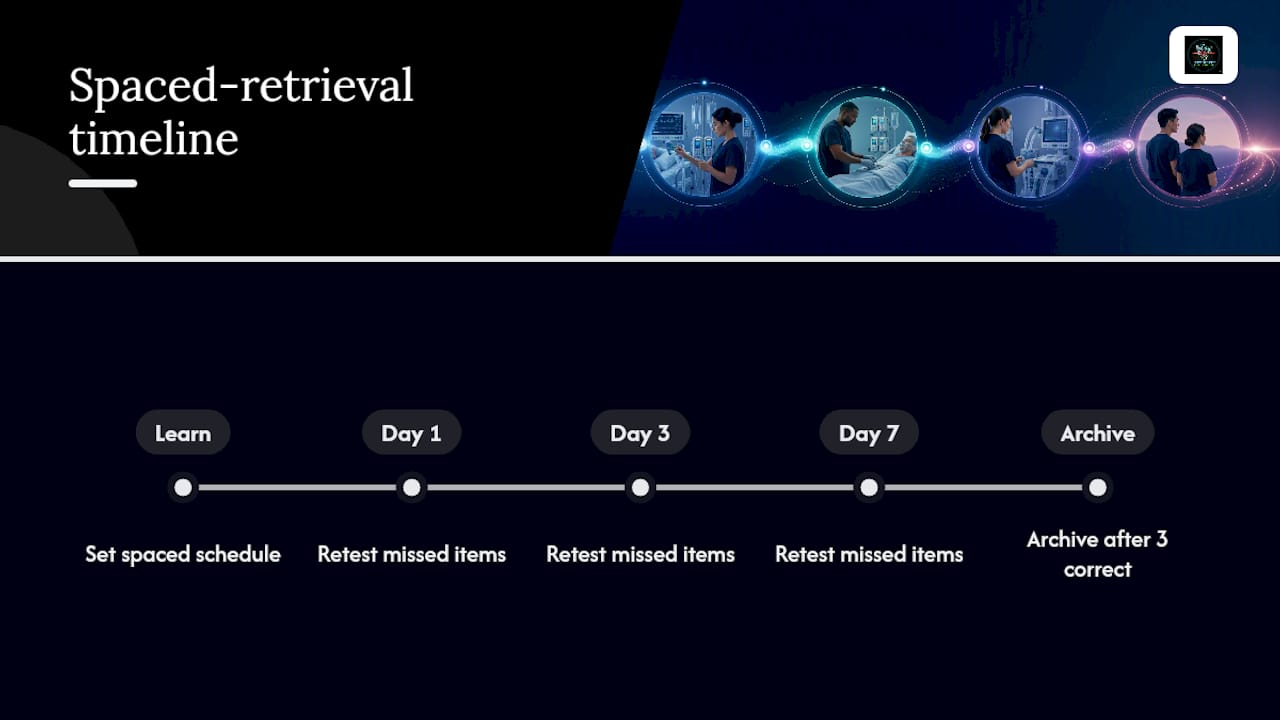
This schedule matters because most nurses over-review material they already know and under-review the handful of concepts that keep tripping them up. Spaced retrieval forces your attention back to genuine gaps on a predictable timeline instead of whenever you happen to feel like it.
Finally, use your performance reports to reweight your hours weekly. For a fuller walkthrough of this cycle across a full prep timeline, Zero Deficit’s 6-week case study practice plan shows how the focused and mixed sessions alternate week to week.
A Nurse’s Honest Take on CCRN Prep Timelines
Most ICU RNs need somewhere between six and twelve weeks of consistent study to feel exam-ready, not the two frantic weeks some people attempt after a bad shift schedule finally opens up. If you’re working three 12-hour shifts a week, that timeline stretches, and that’s fine. Set milestones by system coverage, not by a calendar date: “I’ve run a mixed timed block covering all eight systems at least twice” is a real milestone. “It’s been three weeks” is not.
The behavior changes that actually move your score aren’t glamorous. A consistent study window, even 45 minutes four times a week, beats sporadic four-hour weekend cram sessions. A short debrief after every timed block, just five minutes reviewing what you missed and why, compounds faster than most people expect. And sleep matters more during a shock or vent question than another hour of passive reading at 11 PM after a night shift.
If there’s one mistake I see retakers repeat, it’s memorizing lists instead of building frameworks. You don’t need to memorize fifty separate facts about shock. You need one decision framework you can run under pressure, at 2 AM, for a patient who doesn’t match the textbook picture. Build the framework first. The facts slot into it naturally.
— Zero
Turn System Practice Into a Full CCRN Study Plan
Zero Deficit™ is built around the exact workflow described above: a system-by-system question bank instead of a single undifferentiated pile of questions. The platform gives you practice questions with detailed rationales explaining not just the correct answer but why the other three are wrong, organized by system so you can go straight to your weak spots instead of hunting through a mixed bank hoping to stumble onto relevant cardiac or neuro items.
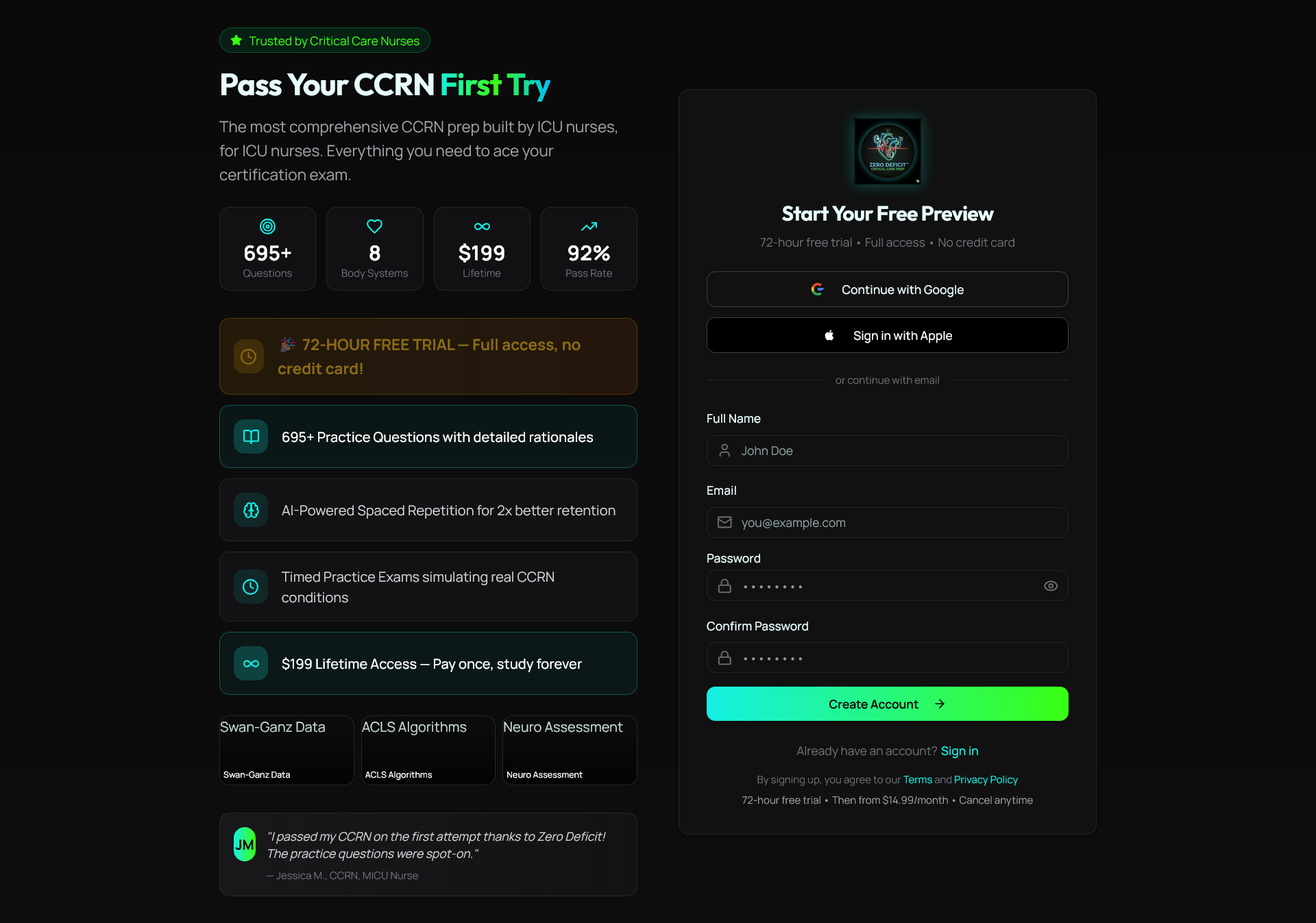
Start with the free quizzes: the cardiovascular set or respiratory set are good first stops if either system came up weak on your diagnostic. From there, the full practice test index covers all eight tested body systems, each with rationale-backed items built by ICU nurses. Once you’ve seen how the system-specific approach fits your gaps, AI-powered review tools and spaced repetition unlock with a subscription: Premium Monthly runs $14.99 per month, and Yearly Access runs $84.99 per year, both through the subscription page. A Lifetime Mastery option is also available, with pricing listed on the same page.
Run the free diagnostic today, take one system quiz in the domain that worried you most, and decide from there whether full access fits your timeline.
Sources
- CCRN Exam Handbook - Knowledge Professional Pathway (AACN)
- CCRN exam changes: November 2025 revision - MedPreps
- CCRN study blueprint: Strategy, pacing & practice - PrepPool
FAQ
What Is CCRN Practice by System?
It means working through practice questions and study guides organized by body system, such as cardiovascular or renal, instead of a single mixed question bank. This lets you target the AACN’s current test-plan weights and spend more time on your weakest categories.
How Many Questions Are on the CCRN Exam?
The CCRN exam has 150 total items given over 3 hours, made up of 125 scored questions and 25 unscored pretest questions, per the CCRN Exam Handbook. Every item falls under the 80/20 Clinical Judgment and Professional Caring and Ethical Practice split.
Which CCRN System Should I Study First?
Start with a diagnostic covering all systems, then study whichever categories you missed most. Since the November 2025 revision increased the weight on multisystem and neurological/musculoskeletal content, don’t assume cardiovascular still deserves the majority of your hours by default.
How Much Does Zero Deficit™ CCRN Prep Cost?
Premium Monthly costs $14.99 per month and Yearly Access costs $84.99 per year, both listed on the subscription page. A Lifetime Mastery plan is also available, with its price listed on that same page.
Recommended
Take a Respiratory practice quiz
Master ARDS, ventilation, ABGs, oxygenation, and pulmonary emergencies.
Get Your Free 20-Question CCRN Diagnostic
20 high-yield CCRN-style questions across every body system, with detailed rationales — emailed to you instantly.
No spam. One email + a couple of helpful follow-ups. Unsubscribe anytime.
Ready to pass your CCRN?
Join 12,000+ nurses using Zero Deficit — 695+ practice questions with rationales, AI-powered weak-area drilling, and spaced-repetition flashcards.
Start Free Trial →