CCRN Sepsis: Exam Mastery Guide for Critical Care Nurses
TL;DR:
- Sepsis causes life-threatening organ dysfunction from an unregulated immune response to infection. It is a top priority topic for the CCRN exam, requiring mastery of diagnostic criteria, pathophysiology, and treatment bundles. Understanding how to interpret clinical signs, hemodynamic data, and multisystem effects is essential for exam success and patient care.
Sepsis is defined as life-threatening organ dysfunction caused by a dysregulated host response to infection, and it is one of the highest-yield topics on the CCRN exam. The multisystem domain covers approximately 14% of exam questions, roughly 21 scored items, making sepsis content a non-negotiable priority in your CCRN exam preparation. Mastering this topic means understanding the Surviving Sepsis Campaign bundles, hemodynamic goals, and the multisystem organ dysfunction that defines septic shock. This guide gives you the clinical depth and exam strategy you need to walk into test day confident.
What are the CCRN sepsis diagnostic criteria you must know?
Sepsis-3 criteria define sepsis as organ dysfunction caused by a dysregulated host response to infection. The formal tool for measuring organ dysfunction is the Sequential Organ Failure Assessment, or SOFA score. A SOFA score increase of 2 or more points from baseline confirms organ dysfunction in the context of suspected infection.

Septic shock is a subset of sepsis. Per Sepsis-3 diagnostic parameters, septic shock requires persistent hypotension needing vasopressors to maintain a MAP of 65 mmHg or higher, plus a serum lactate greater than 2 mmol/L despite adequate fluid resuscitation. That combination signals a mortality risk significantly higher than sepsis alone.
Clinical signs to recognize at the bedside and on the exam:
- Fever above 38.3°C or hypothermia below 36°C
- Heart rate above 90 beats per minute
- Respiratory rate above 20 breaths per minute
- Altered mental status or new confusion
- Lactate at or above 2 mmol/L
- White blood cell count above 12,000 or below 4,000 cells/mcL
- Hypotension with systolic BP below 90 mmHg or MAP below 65 mmHg
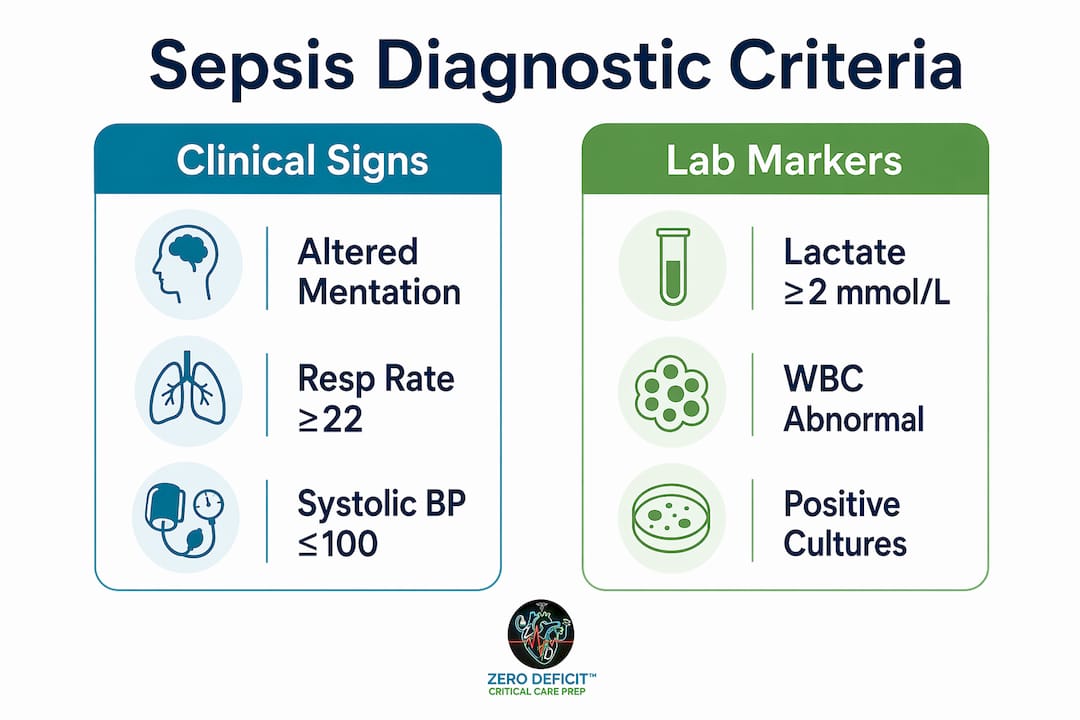
The quick SOFA, or qSOFA, screen uses three criteria: altered mentation, respiratory rate of 22 or higher, and systolic BP of 100 or lower. Two or more qSOFA points signal high risk and should prompt full SOFA assessment and immediate escalation.
| Lab or Parameter | Normal Range | Sepsis Concern |
|---|---|---|
| Lactate | 0.5–2.0 mmol/L | ≥2 mmol/L (sepsis); ≥4 mmol/L (high risk) |
| WBC | 4,500–11,000 cells/mcL | >12,000 or <4,000 |
| MAP | 70–110 mmHg | <65 mmHg triggers vasopressor use |
| Serum creatinine | 0.6–1.2 mg/dL | Rising trend suggests AKI |
| Procalcitonin | <0.1 ng/mL | Elevated in bacterial sepsis |
Pro Tip: Memorize the lactate thresholds cold. The CCRN exam uses lactate levels to distinguish sepsis from septic shock and to trigger specific bundle interventions. A lactate of 4 mmol/L or higher mandates 30 mL/kg crystalloid regardless of blood pressure.
How does sepsis pathophysiology drive multisystem organ failure?
Sepsis triggers a dysregulated immune response that attacks the host’s own tissues. Inflammatory mediators including tumor necrosis factor and interleukins cause widespread endothelial damage, capillary leak, and vasodilation. The result is distributive shock, where cardiac output is high but oxygen delivery to tissues fails because of maldistribution of blood flow.
The cardiovascular system takes the first hit. Vasodilation drops systemic vascular resistance, and capillary leak reduces effective circulating volume. The heart compensates with tachycardia and increased output initially, but myocardial depression from inflammatory cytokines can develop within 24–48 hours. This pattern of high cardiac output with low SVR is the hemodynamic fingerprint of distributive shock in sepsis.
“Timely identification and evidence-based management by nurses is the key to reducing sepsis ICU mortality, beyond rote memorization of definitions.” — Maureen Seckel, AACN
Multisystem effects the CCRN exam tests directly:
- Pulmonary: Capillary leak causes ARDS. Expect bilateral infiltrates, PaO2/FiO2 ratio below 300, and the need for lung-protective ventilation with tidal volumes of 6 mL/kg ideal body weight.
- Renal: Hypoperfusion and inflammatory injury cause acute kidney injury. Rising creatinine and oliguria are early warning signs. CRRT may be required in severe cases.
- Hepatic: Elevated bilirubin and transaminases reflect hepatic hypoperfusion and cholestasis.
- Hematologic: Disseminated intravascular coagulation can develop, presenting with thrombocytopenia, elevated PT/INR, and low fibrinogen.
- Neurologic: Sepsis-associated encephalopathy causes confusion, agitation, and reduced GCS without a primary brain lesion.
The multisystem domain on the CCRN tests integration across these systems simultaneously. A single case scenario may require you to interpret a ventilator waveform, a hemodynamic profile, and a metabolic panel at the same time.
What are the Surviving Sepsis Campaign bundle interventions for the CCRN exam?
The Surviving Sepsis Campaign 1-hour bundle is the gold standard for sepsis management in ICU settings and a guaranteed topic on your exam. Every component has a rationale. Knowing the “why” behind each step protects you on clinical reasoning questions.
The 1-hour bundle components, in order:
- Measure lactate. A lactate of 4 mmol/L or higher identifies tissue hypoperfusion even when blood pressure appears normal. Remeasure lactate if the initial level is above 2 mmol/L.
- Obtain blood cultures before antibiotics. Draw at least two sets from separate sites. Do not delay antibiotics more than 45 minutes to get cultures.
- Administer broad-spectrum antibiotics within one hour. Time to antibiotic is the single most impactful intervention for sepsis mortality. Every hour of delay worsens outcomes.
- Give 30 mL/kg IV crystalloid for hypotension or lactate at or above 4 mmol/L. Normal saline and lactated Ringer’s are both acceptable. Balanced crystalloids like lactated Ringer’s are preferred in many ICUs to reduce hyperchloremic acidosis.
- Start vasopressors if MAP remains below 65 mmHg after fluid resuscitation. Norepinephrine is the first-line vasopressor for septic shock per current guidelines.
Pro Tip: The exam will test whether you know that norepinephrine is first-line, not dopamine. Vasopressin can be added as a second agent to reduce norepinephrine dose. Epinephrine is reserved for refractory cases.
| Shock Type | Cardiac Output | SVR | CVP | Primary Cause |
|---|---|---|---|---|
| Distributive (septic) | High | Low | Low/normal | Vasodilation, capillary leak |
| Cardiogenic | Low | High | High | Pump failure |
| Hypovolemic | Low | High | Low | Volume loss |
| Obstructive | Low | High | High | Mechanical obstruction |
Source control is the fourth pillar of sepsis management alongside fluids, antibiotics, and vasopressors. Drain abscesses, remove infected lines, and debride infected tissue as soon as the patient is stable enough. The CCRN exam will present scenarios where you must identify the correct source control action as part of the management sequence.
How do you interpret hemodynamic data in septic patients?
Hemodynamic interpretation is one of the most frequently missed skill areas on the CCRN exam. Mastering numeric hemodynamic tables with values like SVR, CVP, pulmonary artery pressure, and cardiac index requires practice with clinical reasoning, not just memorization of numbers.
| Parameter | Normal Range | Septic Shock Pattern |
|---|---|---|
| MAP | 70–110 mmHg | <65 mmHg |
| CVP | 2–6 mmHg | Low to normal |
| Cardiac Output | 4–8 L/min | Elevated (hyperdynamic) |
| Cardiac Index | 2.5–4.0 L/min/m² | Elevated |
| SVR | 800–1,200 dynes/sec/cm⁵ | Low (<800) |
| Lactate | 0.5–2.0 mmol/L | Elevated (>2 mmol/L) |
The hemodynamic profile of distributive shock is the opposite of cardiogenic shock. In sepsis, you see high cardiac output with low SVR. In cardiogenic shock, you see low cardiac output with high SVR. That distinction drives every management decision.
Key clinical applications for exam scenarios:
- A patient with MAP of 58, cardiac index of 4.2, and SVR of 650 is in distributive shock. Start norepinephrine, not a fluid bolus alone.
- A rising lactate despite fluid resuscitation signals persistent tissue hypoperfusion. Reassess fluid responsiveness with a passive leg raise or pulse pressure variation before giving more volume.
- CVP alone does not reliably predict fluid responsiveness. Dynamic measures like stroke volume variation are more accurate in mechanically ventilated patients.
Practicing with clinical case simulations that include full hemodynamic tables builds the pattern recognition you need. Reading a number in isolation is different from interpreting it in context of the full clinical picture.
What study strategies work best for sepsis and multisystem CCRN content?
The multisystem domain requires synthesis across body systems. Sepsis questions on the CCRN appear as complex clinical cases, not isolated fact recall. Your study plan must reflect that.
Effective strategies for mastering sepsis content:
- Dedicate approximately 12 focused hours to the multisystem and sepsis domain. Spread sessions across multiple weeks to improve retention.
- Use the AACN’s official PassPoint practice questions as your benchmark. PassPoint is developed by the same organization that writes the exam.
- Work through CCRN infection control and sepsis guides that integrate multisystem content with clinical reasoning frameworks.
- Practice hemodynamic table interpretation weekly. Build fluency with the numbers before test day.
- Use flashcards for bundle components and normal lab values. Use case simulations for applying that knowledge.
Pro Tip: Track your practice question performance by domain using a tool like the Zerodeficitccrnprep progress tracker. If your multisystem accuracy is below 70%, add two more focused study sessions before your exam date.
Avoid studying sepsis as a standalone topic. The AACN exam blueprint places it inside the multisystem domain for a reason. Every sepsis case connects to cardiovascular hemodynamics, pulmonary mechanics, and renal function. Study it that way.
Key takeaways
Sepsis management on the CCRN exam demands clinical reasoning across multiple body systems, not isolated memorization of definitions or bundle steps.
| Point | Details |
|---|---|
| Sepsis-3 definition | Sepsis is life-threatening organ dysfunction from a dysregulated host response to infection, confirmed by a SOFA score increase of 2 or more. |
| 1-hour bundle sequence | Measure lactate, draw cultures, give broad-spectrum antibiotics, infuse 30 mL/kg crystalloid, and start norepinephrine if MAP stays below 65 mmHg. |
| Distributive shock profile | Septic shock presents with high cardiac output, low SVR, and low MAP. This pattern is the opposite of cardiogenic shock. |
| Hemodynamic interpretation | Normal MAP is 70–110 mmHg and CVP is 2–6 mmHg. Deviations in context drive vasopressor and fluid decisions. |
| Study approach | Dedicate 12 focused hours to the multisystem domain and practice with full clinical case scenarios, not isolated fact drills. |
Zero’s take on mastering sepsis for the CCRN
The nurses I see struggle most with sepsis questions are not the ones who forgot the bundle. They are the ones who memorized the bundle but cannot apply it when the question wraps it inside a ventilated patient with AKI and a rising bilirubin. The CCRN exam is testing your clinical judgment, not your ability to recite a checklist.
My honest advice: stop drilling definitions and start practicing full case scenarios. When you see a hemodynamic table with a cardiac index of 4.5 and an SVR of 600, you should immediately think distributive shock and reach for norepinephrine in your mind before you even read the answer choices. That reflex comes from repetition with real clinical context, not from reading a textbook summary.
The Surviving Sepsis bundle is not just exam content. It is the framework that saves lives in your ICU. When you study it that way, the knowledge sticks differently. You are not memorizing steps. You are building a mental model of a patient in crisis and what they need in the next 60 minutes.
Use practice questions every single week leading up to your exam. Review every rationale, especially the ones you got right. Knowing the right answer for the wrong reason is a trap. Track your progress, identify your weak domains, and go back to the clinical reasoning behind each concept. That is how you pass on your first attempt.
— Zero
How Zerodeficitccrnprep supports your sepsis exam prep
Zerodeficitccrnprep is built by ICU nurses who know exactly what the CCRN multisystem domain demands. The platform’s sepsis and shock topic guides align directly with the AACN exam blueprint and current Surviving Sepsis Campaign guidelines. Every guide includes detailed rationales, not just answer keys.
The CCRN study guides covering all 8 body systems include dedicated multisystem content with hemodynamic tables, bundle breakdowns, and clinical case walkthroughs. With over 695 CCRN practice questions built around the exam blueprint, you get the repetition and clinical reasoning practice that translates directly to exam performance. Start your focused sepsis prep today and build the confidence to pass on your first attempt.
FAQ
What is the Sepsis-3 definition used on the CCRN exam?
Sepsis-3 defines sepsis as life-threatening organ dysfunction caused by a dysregulated host response to infection, confirmed by a SOFA score increase of 2 or more points. Septic shock adds persistent hypotension requiring vasopressors to maintain MAP at or above 65 mmHg and a lactate above 2 mmol/L despite adequate fluids.
What lactate level triggers the 30 mL/kg fluid bolus in the sepsis bundle?
A lactate of 4 mmol/L or higher triggers the 30 mL/kg IV crystalloid bolus regardless of blood pressure. A lactate between 2 and 4 mmol/L combined with hypotension also meets the threshold for fluid resuscitation per the Surviving Sepsis Campaign 1-hour bundle.
Which vasopressor is first-line for septic shock on the CCRN exam?
Norepinephrine is the first-line vasopressor for septic shock per current Surviving Sepsis Campaign guidelines. Vasopressin can be added as a second agent, and epinephrine is reserved for refractory septic shock.
How does septic shock differ from cardiogenic shock hemodynamically?
Septic shock presents with high cardiac output and low SVR due to vasodilation. Cardiogenic shock presents with low cardiac output and high SVR due to pump failure. Knowing this distinction is critical for selecting the correct intervention in CCRN exam scenarios.
How many CCRN exam questions cover sepsis and the multisystem domain?
The multisystem domain accounts for approximately 14% of CCRN exam questions, which equals roughly 21 scored items. Sepsis content appears throughout this domain, often embedded in complex clinical cases requiring integration of cardiovascular, pulmonary, and renal data.
Recommended
- CCRN Infection Control Review Topics: ICU Nurse Guide | Zero Deficit CCRN Prep
- Pass the CCRN Exam: Proven Guide for Critical Care Nurses | Zero Deficit CCRN Prep
- Neurology CCRN Study Guide: Exam Prep Resources | Zero Deficit™
- How educators boost CCRN certification success for nurses | Zero Deficit CCRN Prep
Take a Multisystem practice quiz
Master sepsis, shock, MODS, and multi-organ failure scenarios.
Get Your Free 20-Question CCRN Diagnostic
20 high-yield CCRN-style questions across every body system, with detailed rationales — emailed to you instantly.
No spam. One email + a couple of helpful follow-ups. Unsubscribe anytime.
Ready to pass your CCRN?
Join 12,000+ nurses using Zero Deficit — 695+ practice questions with rationales, AI-powered weak-area drilling, and spaced-repetition flashcards.
Start Free Trial →