CCRN Test Length: 3 Hours, 150 Items Explained
The Adult CCRN exam runs exactly 3 hours (180 minutes) and presents 150 multiple-choice items — 125 scored and 25 unscored pretest items that are indistinguishable from the rest. Per the CCRN Exam Handbook, content maps to the AACN Synergy Model: 80% Clinical Judgment and 20% Professional Caring & Ethical Practice. That split tells you exactly where to spend your study hours.
- Time limit: 180 minutes, continuous clock
- Total items presented: 150 multiple-choice questions
- Scored items: 125; unscored pretest items: 25
- Content weighting: 80% Clinical Judgment / 20% Professional Caring & Ethical Practice
- Delivery: computer-based at a testing center or via remote proctoring, available year-round
The 25 pretest items are embedded throughout the exam and are completely indistinguishable from scored items. You cannot skip them or treat them differently — pace for all 150.
Key Takeaways
The Adult CCRN runs 180 minutes, presents 150 items (125 scored, 25 unscored), and weights 80% of content toward Clinical Judgment — making timed full-length simulation the single most important study tool you can use.
| Point | Details |
|---|---|
| CCRN test length | 180 minutes (3 hours) for 150 items; 125 scored, 25 unscored pretest items. |
| Content weighting | 80% Clinical Judgment, 20% Professional Caring & Ethical Practice per the AACN Synergy Model. |
| Pacing checkpoints | Target 60 questions by 60 minutes and 120 by 120 minutes; apply the 90-second guess-and-flag rule. |
| Retake policy | Up to four attempts in a 12-month period; discounted retest fee available for unsuccessful candidates. |
| Zerodeficitccrnprep | Offers full 3-hour simulations, 695+ practice questions with rationales, and AI-driven domain reports mapped to the AACN blueprint. |
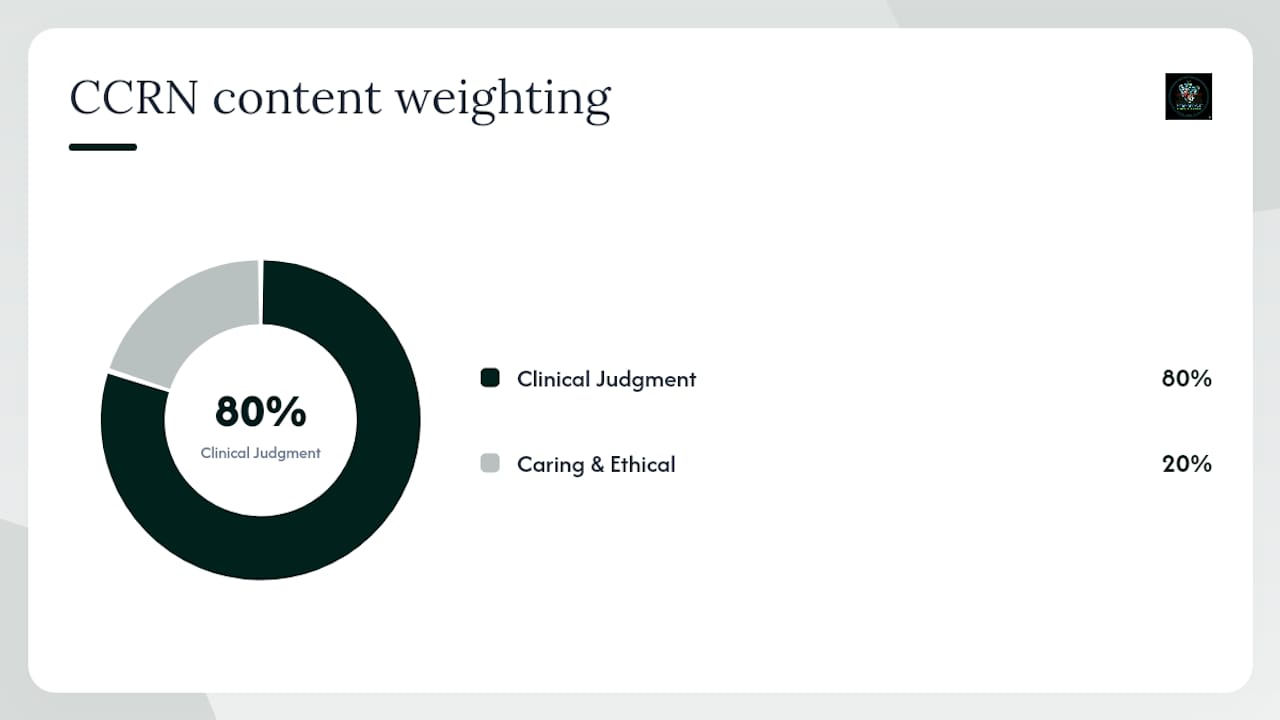
Table of Contents
- How does the CCRN exam structure your 3 hours?
- How do you pace yourself through 150 questions in 3 hours?
- What does an 8-week study timeline look like for the CCRN?
- How do practice tools help you simulate the real exam timing?
- What are the test-day logistics and retake rules?
- The part of CCRN prep most nurses underestimate
- Ready to practice under real exam conditions?
- Sources
- FAQ
How does the CCRN exam structure your 3 hours?
The exam is computer-based, delivered either at a Pearson VUE testing center or through remote proctoring. Every item is a single-best-answer multiple-choice question. No alternate-format items, no drag-and-drop.
The 25 pretest items are scattered randomly. They gather statistical data for future exams and do not affect your score — but because they look identical to scored items, your pacing must account for all 150.
Adult CCRN content domains to prioritize:
- Cardiovascular (hemodynamics, shock, ACS, vasopressors, drips)
- Pulmonary (ARDS, mechanical ventilation, ABGs)
- Neurological (ICP management, stroke, sedation)
- Multisystem (sepsis, MODS, SIRS)
- Endocrine (DKA, HHS, thyroid storm, adrenal crisis)
- Renal (AKI, CRRT, electrolyte emergencies)
- Professional Caring & Ethical Practice (Synergy Model, advocacy, ethics)
| Parameter | Detail |
|---|---|
| Total items presented | 150 |
| Scored items | 125 |
| Unscored pretest items | 25 |
| Time limit | 180 minutes |
| Clinical Judgment weighting | 80% |
| Professional Caring & Ethical Practice | 20% |
| Delivery options | Testing center or remote proctoring |
From the AACN Certification Corporation: The exam content reflects the AACN Synergy Model for Patient Care, with the majority of items testing Clinical Judgment across the core adult critical care systems.
Pro Tip: Download the official AACN CCRN Exam Handbook before you build your study plan. The blueprint percentages within Clinical Judgment shift by system — cardiovascular and pulmonary together carry the heaviest weight.
How do you pace yourself through 150 questions in 3 hours?
The math is straightforward: 180 minutes divided by 150 items gives you 72 seconds per question. That is your baseline. In practice, some items take 30 seconds and a few will tempt you past 2 minutes — which is where pacing discipline matters most.
Per established pacing guidance, two checkpoints keep you on track:
- 60 questions by 60 minutes
- 120 questions by 120 minutes
If you hit either checkpoint late, pick up your pace immediately. Do not try to “make up time” by rushing through a block — increase your decision speed on straightforward items instead.
The 90-second rule: If you have spent more than 90 seconds on a single item, make your best educated guess, flag it, and move on. Spending 3 minutes on one question costs you two others. The flag-and-return feature exists for exactly this reason — use it.
Pacing is a clinical skill, not a test-taking trick. The same discipline you use to triage a deteriorating patient applies here: assess quickly, act decisively, and reassess when you have time.
Pacing checklist for exam day:
- Set a mental checkpoint at question 60 (should be at or before 60 minutes)
- Set a second checkpoint at question 120 (should be at or before 120 minutes)
- Apply the 90-second rule consistently — flag and move
- Reserve the final 10–15 minutes to return to flagged items
- Never leave an item blank; an educated guess scores better than nothing
Pro Tip: During practice sessions, track your average time per question by block. If your average creeps above 80 seconds, that is a signal to work on clinical reasoning speed, not just content.
What does an 8-week study timeline look like for the CCRN?
Structure your prep around the 3-hour window from week one. A 10-week CCRN study plan follows a similar ramp: content-heavy early weeks, pacing-focused later weeks.
Weeks 1–4: Content by system
- Cover one major system per week (cardiovascular, pulmonary, neuro, sepsis/MODS)
- Use 60–90 minute timed topic sets (30–40 questions per session)
- Review every rationale — correct and incorrect options both
Weeks 5–6: Mixed-system timed sets
- Run 75-question timed blocks (90 minutes) mixing two or three systems
- Apply the 60/120 checkpoint rule within each block
- Begin spaced repetition for high-yield topics: DKA glucose targets (>250 mg/dL), MAP goals in septic shock (≥65 mmHg), ARDS Berlin criteria (P/F ratio <300)
Weeks 7–8: Full 3-hour simulations
- Run at least two full 150-item timed simulations under exam conditions
- Simulate the full session: no phone, no breaks, 180-minute clock
- After each simulation, categorize missed items by domain and target the weakest system
Weekly practice goals:
- Minimum 3 timed sessions per week
- At least one session per week reviewing rationales in depth
- One full-length simulation in the final two weeks
Pro Tip: Do not wait until week 7 to sit for a full 3-hour simulation. Run one in week 4 as a baseline — the cognitive fatigue you feel at question 120 is data you need early.
How do practice tools help you simulate the real exam timing?
The most common mistake nurses make in CCRN prep is practicing in short, untimed bursts. Full-length timed simulations that present all 150 items — including randomized pretest items — are what actually build the stamina and pacing instincts the real exam demands.
Features to look for in any simulation tool:
- Full 150-item timed exams with a continuous 180-minute clock
- Flag-and-return functionality that mirrors the real testing interface
- Randomized item order across all content domains
- Detailed rationales for both correct and incorrect answer choices
- Post-exam performance reports broken down by domain
Simulations that randomize pretest items and provide detailed rationales for both correct and incorrect options offer the best transfer to real-exam performance.
Zerodeficitccrnprep’s platform includes 695+ practice questions with full rationales, AI-powered review that identifies your weakest domains, and full-length timed simulations built to the 3-hour AACN standard. After each simulation, the platform’s performance reports show your pacing against the 60/120 checkpoints and flag which Synergy Model domains need the most work.
Staggered drills to build stamina:
- Checkpoint drill: 60 questions, 60-minute clock — strict stop at the buzzer
- Half-exam drill: 75 questions, 90 minutes — practice the flag-and-return workflow
- Full simulation: 150 questions, 180 minutes — exam conditions, no interruptions
Pro Tip: After every full simulation, spend 20 minutes reviewing only the items you flagged. That review pattern mirrors what you will do in the real exam’s final 10–15 minutes.
What are the test-day logistics and retake rules?
The CCRN exam is available year-round at Pearson VUE testing centers and via remote proctoring. Schedule through the AACN’s testing portal after your eligibility is confirmed.
Critical logistics to know:
- The 180-minute clock starts when you begin and does not pause. Any time away from the computer counts against your total.
- No scheduled breaks are built into the exam session.
- Bring a valid, government-issued photo ID. The name must match your AACN registration exactly.
- For remote proctoring, test your equipment and internet connection at least 48 hours before your scheduled session.
Retake policy: Per the AACN FAQ, you may take the CCRN up to four times in a 12-month period. Candidates who do not pass are eligible for a discounted retest fee until they pass. Always confirm current policies on the AACN’s “Prepare to Take Your Exam” page before scheduling a retest.
Test-day checklist:
- Valid government-issued photo ID
- Confirmation email and authorization-to-test number
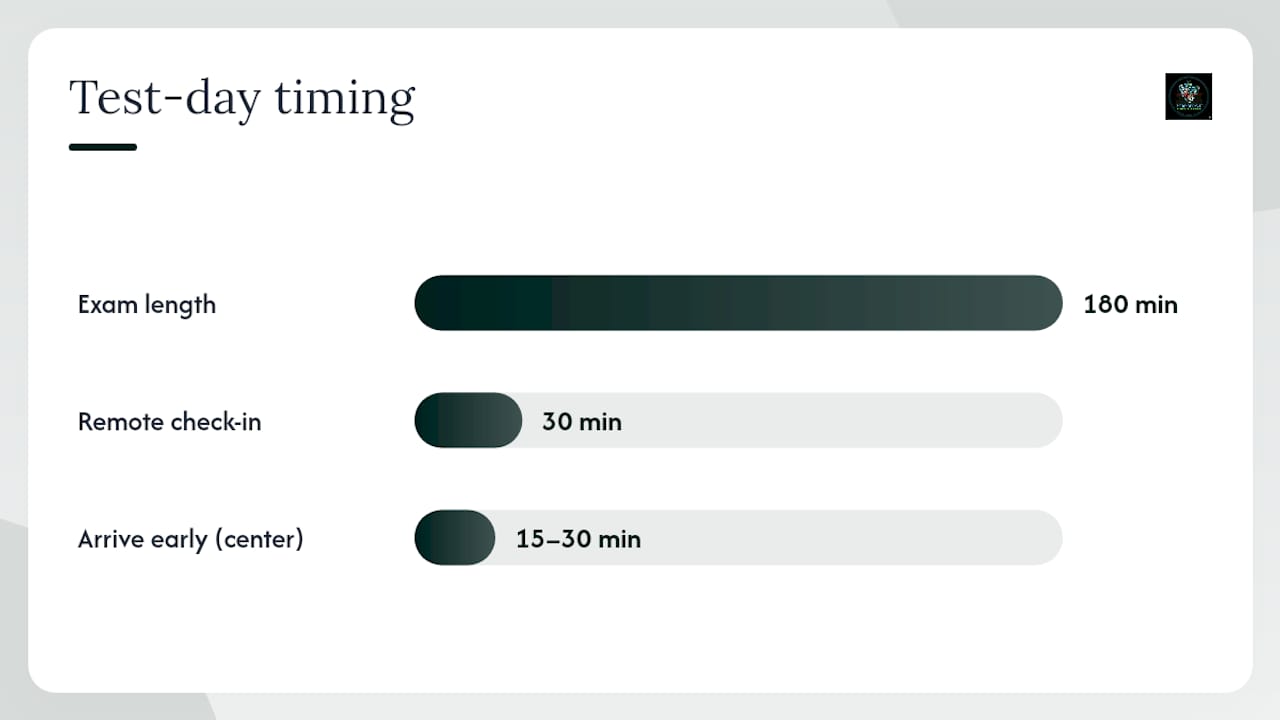
- Arrive 15–30 minutes early (testing center) or complete remote check-in 30 minutes before start
- Eat a real meal beforehand — cognitive performance at question 120 depends on it
- Know your 60/120 pacing checkpoints before you sit down
Score reports: Your unofficial score appears immediately after you finish. The report shows your total scaled score and a domain-by-domain breakdown. If you need to retest, use that breakdown to target your weakest Synergy Model domain first — not your weakest topic overall.
Pro Tip: Review your exam-day checklist the night before, not the morning of. Decision fatigue is real, and you want zero logistical surprises on test day.
The part of CCRN prep most nurses underestimate
Most nurses study hard. The ones who struggle on exam day usually have a content problem less often than a stamina and pacing problem. Sitting for 180 minutes of sustained clinical reasoning is a physical and cognitive event — and you cannot train for it by doing 20-question quizzes.
The 90-second rule is not just a time-management trick. It is a proxy for clinical confidence. When you know the material, you decide quickly. When you are second-guessing yourself, you are usually overthinking a distractor rather than reasoning through the stem. Practicing under timed conditions forces you to trust your clinical knowledge and move forward — the same way you do at the bedside.
One more thing: the 80/20 content split means the Synergy Model and ethics questions are not filler. Twenty percent of your score comes from Professional Caring & Ethical Practice. Nurses who skip that domain in prep consistently leave points on the table.
Ready to practice under real exam conditions?
Zerodeficitccrnprep gives you the closest thing to sitting the actual CCRN before you ever walk into the testing center. The platform’s full-length practice tests run on a 180-minute clock, present 150 items with randomized pretest-style questions, and generate post-exam reports that map your pacing and domain performance directly to the AACN Synergy Model blueprint.
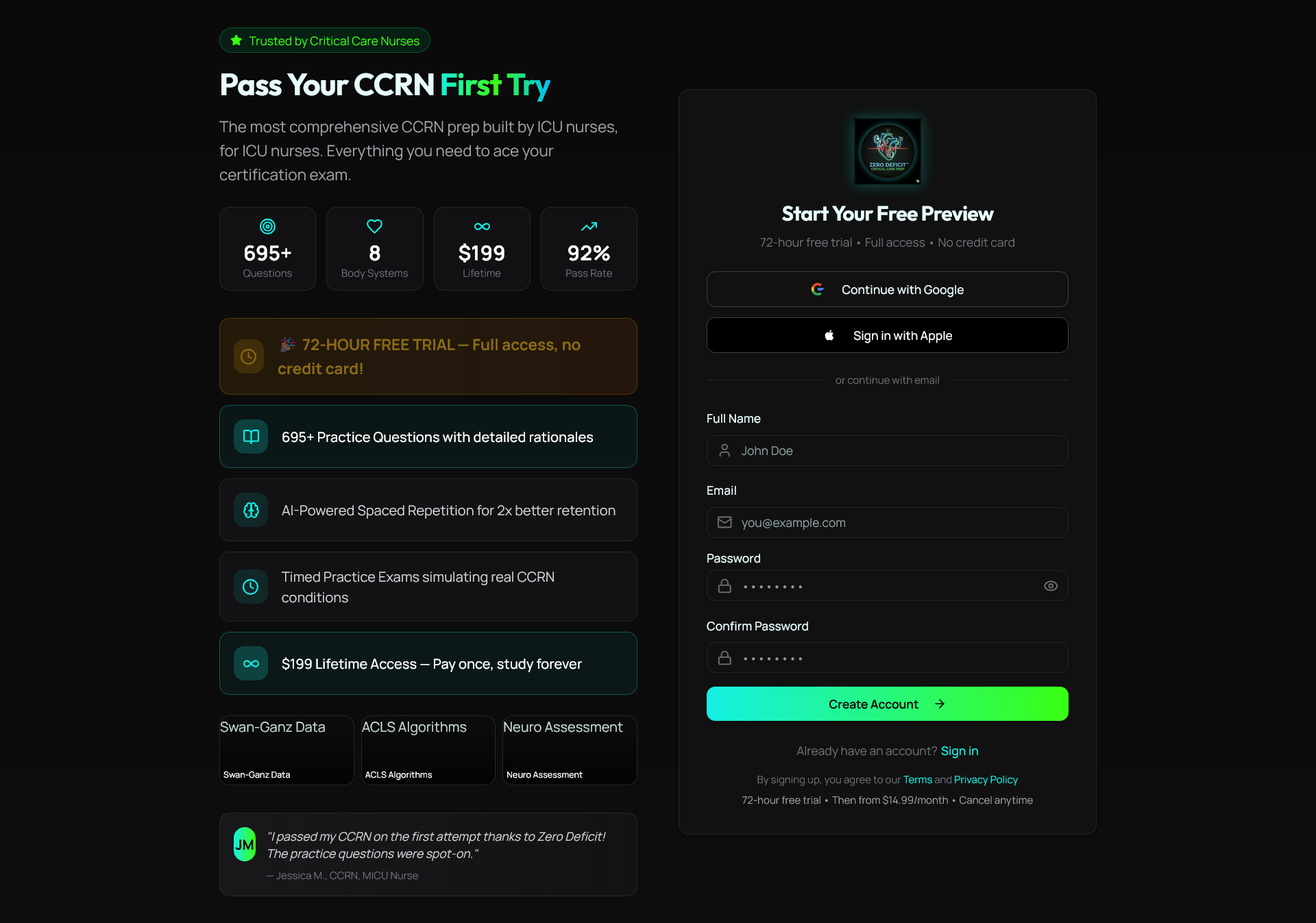
With 695+ questions written by ICU nurses, detailed rationales for every answer choice, and AI-powered review that surfaces your weakest domains, Zerodeficitccrnprep is built for the nurse who wants to pass on the first attempt. The body-system study guides cover all eight AACN blueprint systems, from cardiovascular hemodynamics to CRRT and ethics. Start with a free trial and run your first timed simulation this week.
Sources
- Frequently Asked Questions: CCRN Certification (Direct Care Pathway) - AACN
- Nurse
- CCRN exam handbook (Jefferson copy)
FAQ
How long is the CCRN exam?
The CCRN exam is 3 hours (180 minutes) long, presenting 150 multiple-choice items on a continuous clock with no scheduled breaks.
How many questions are on the CCRN, and how many are scored?
The exam presents 150 items total: 125 are scored and 25 are unscored pretest items that are indistinguishable from the rest.
What is the CCRN exam format?
The CCRN is a computer-based, single-best-answer multiple-choice exam available year-round at Pearson VUE testing centers or via remote proctoring.
How many times can you retake the CCRN if you don’t pass?
You may attempt the CCRN up to four times within a 12-month period, and unsuccessful candidates qualify for a discounted retest fee until they pass.
How should you pace yourself during the CCRN?
Aim for 60 questions by 60 minutes and 120 by 120 minutes; if any single item takes more than 90 seconds, make your best guess, flag it, and move on.
Recommended
Take a Multisystem practice quiz
Master sepsis, shock, MODS, and multi-organ failure scenarios.
Get Your Free 20-Question CCRN Diagnostic
20 high-yield CCRN-style questions across every body system, with detailed rationales — emailed to you instantly.
No spam. One email + a couple of helpful follow-ups. Unsubscribe anytime.
Ready to pass your CCRN?
Join 12,000+ nurses using Zero Deficit — 695+ practice questions with rationales, AI-powered weak-area drilling, and spaced-repetition flashcards.
Start Free Trial →