Essential ICU Protocols Every Critical Care Nurse Needs
The essential ICU protocols come down to nine bundles: sepsis management, lung-protective ventilation, pain/agitation/delirium (PAD) control, weaning and extubation, hemodynamic support, thromboprophylaxis and infection control, CRRT/AKI management, nutrition, and glycemic control. Here’s the memorize-it-now version:
- Sepsis: timely administration of antibiotics as soon as septic shock is recognized, 30 mL/kg crystalloids initial bolus, mean arterial pressure targets recommended by guidelines
- Ventilation/ARDS: tidal volume 6 mL/kg PBW, plateau pressure <30 cm H2O
- PAD: targeting light sedation using validated tools like RASS and regular delirium screening with tools such as CAM-ICU
- Weaning: daily SBT when criteria met, cuff-leak check before extubation
- Hemodynamics: vasopressor support initiated if mean arterial pressure remains below recommended thresholds
- Prophylaxis: VTE and stress-ulcer prophylaxis unless contraindicated
- CRRT: effluent dosing around 20 to 25 mL/kg/h, adjusted for downtime
These aren’t just SCCM and ARDSnet talking points. Units running standardized protocol-driven care see less variation in outcomes than units improvising bedside decisions case by case.
Key Takeaways
Essential ICU protocols work because they replace individual judgment under pressure with pre-agreed, evidence-backed targets that every clinician on shift can execute the same way.
| Point | Details |
|---|---|
| Sepsis timing is non-negotiable | Give timely administration of antibiotics as soon as septic shock is recognized and 30 mL/kg crystalloids as the initial bolus. |
| Ventilation targets protect the lung | Set tidal volume near 6 mL/kg PBW and keep plateau pressure under 30 cm H2O. |
| PAD protocol reduces delirium | Use RASS for light sedation targets and CAM-ICU every shift, with analgesia treated first. |
| CRRT dosing needs a margin | Prescribe 25 to 30 mL/kg/h effluent dosing to offset downtime from filter clotting. |
| Study these targets deliberately | Zerodeficitccrnprep’s topic guides and 695+ practice questions map directly to these bedside protocol numbers for CCRN prep. |
This article is general information, not a substitute for advice from a qualified doctor. Consult a qualified healthcare professional about your own circumstances before acting on anything here.
Table of Contents
- What Are the Core Sepsis Recognition and Resuscitation Steps?
- How Do You Set Up Lung-Protective Ventilation?
- What Belongs in a Pain, Agitation, and Delirium Protocol?
- When Is a Patient Ready for a Spontaneous Breathing Trial?
- How Do You Support Blood Pressure and Perfusion at the Bedside?
- What Prophylaxis and Infection-Control Steps Are Non-Negotiable?
- When Should You Start CRRT and How Do You Dose It Right?
- How Do You Turn These Protocols Into Everyday Practice?
- What Should You Memorize for CCRN and Daily Practice?
- Where to Practice These Protocols Before Your Exam
- Sources
- FAQ
What Are the Core Sepsis Recognition and Resuscitation Steps?
Sepsis kills through delay, not complexity. Protocols emphasize the urgency of early recognition and intervention in sepsis, including cultures, antibiotics, fluid resuscitation, and reassessment in a timely manner.
For septic shock, the Surviving Sepsis Campaign recommends antimicrobial therapy ideally within 1 hour of recognition. Initial resuscitation targets 30 mL/kg of crystalloids, and vasopressors are initiated if mean arterial pressure remains below target thresholds despite adequate fluid resuscitation rather than waiting for a second or third bolus.
Lactate trending matters more than a single value. A lactate that’s falling on reassessment tells you resuscitation is working even if the first number looked alarming. Urine output and dynamic measures of fluid responsiveness, not routine repeat boluses, should drive whether you give more volume.
- Recognize early: SOFA/qSOFA plus clinical suspicion
- Cultures before antibiotics, but never delay antibiotics to get them
- Antibiotics within 1 hour for septic shock
- 30 mL/kg crystalloid bolus, reassessed against dynamic indices
- Norepinephrine if MAP <65 mmHg despite adequate fluids
Pro Tip: Keep a prepacked sepsis tray with first-dose antibiotics, tubing, and a lactate order pre-built into your unit’s sepsis alert. The time you save isn’t in the drug, it’s in the walk to the pharmacy.
How Do You Set Up Lung-Protective Ventilation?
Most ventilated adults need lung-protective settings: tidal volume around 6 mL/kg of predicted body weight (PBW), plateau pressure kept under 30 cm H2O. This isn’t ARDS-specific anymore. It’s the default starting point unless there’s a clear reason to deviate.
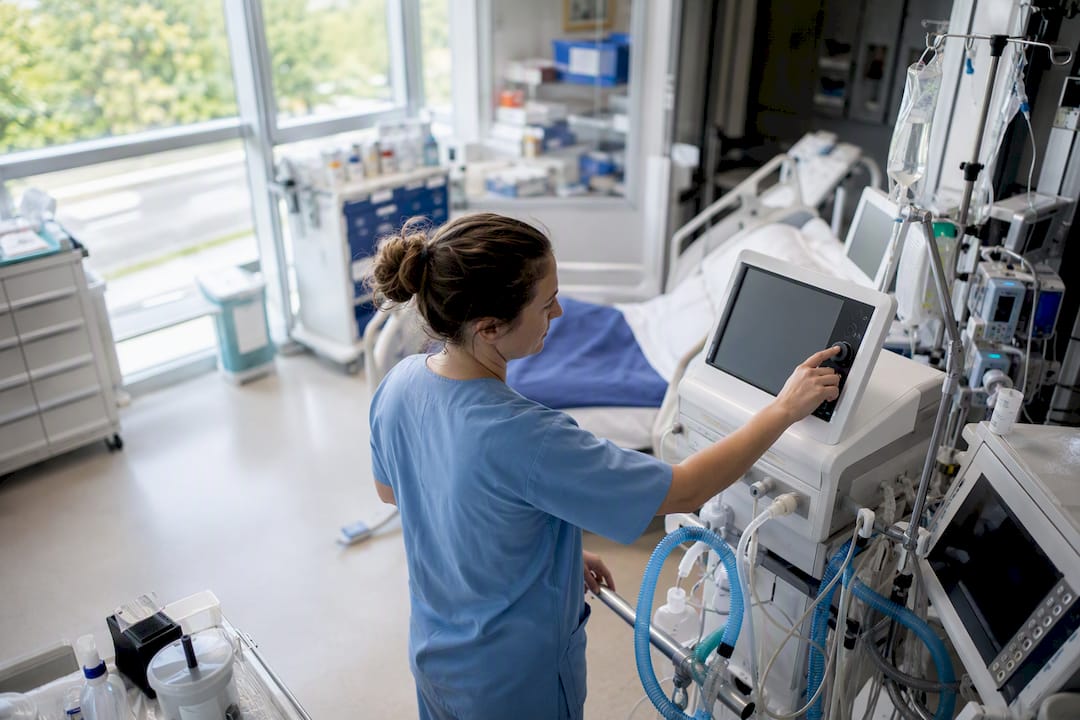
PBW is calculated from height and sex, not actual weight, which trips up plenty of new grads. A 5’4" woman and a 250-pound man with the same height have the same PBW, and that number, not the number on the scale, sets the tidal volume. Rounding to the nearest 50 mL keeps the math fast at 3 AM.
PEEP is adjusted in accordance with oxygenation goals and airway pressure limits, not in isolation. VAP prevention rides alongside every vent setting: head-of-bed elevation to 30 to 45 degrees, oral care on schedule, and subglottic suctioning where the equipment allows it.
- a lung-protective tidal volume based on predicted body weight
- Plateau pressure: under 30 cm H2O
- Daily readiness screen before any SBT
- VAP bundle: HOB elevation, oral care, subglottic suctioning
Pro Tip: For a fast bedside PBW calculation, use the standard formula (50 + 2.3 × [height in inches minus 60] for men; 45.5 + 2.3 × [height in inches minus 60] for women), then multiply by 6. Write the target volume on the whiteboard so every clinician on the shift sees the same number.
Standardized lung-protective and weaning bundles reduce the kind of practice variation that drags out ventilator days across a unit.
What Belongs in a Pain, Agitation, and Delirium Protocol?
Treat pain before you treat agitation. That order matters because oversedating a patient in pain masks the problem instead of fixing it, and it’s the single biggest mindset shift in modern PAD management.

The Society of Critical Care Medicine’s PAD guidelines call for an analgesia-first approach, use of validated sedation scales such as RASS to target light sedation levels, including daily interruption when appropriate when deep sedation isn’t clinically necessary. RASS is primary for sedation targeting, and pairing it with routine CAM-ICU or ICDSC screening catches delirium before it becomes obvious at the bedside, since early mobilization is encouraged to reduce the risk of delirium.
non-benzodiazepine sedatives may be preferred to improve outcomes when sedation is necessary. Delirium prevention runs on habits, not medication: early mobility, protected sleep windows, minimizing deliriogenic drugs, and letting family stay present. Our sedation, analgesia, and delirium guide breaks down RASS scoring ranges in more detail.
- Analgesia first, sedation second
- RASS target charted as an explicit order, not a vague range
- CAM-ICU or ICDSC screened every shift
- Early mobility protocol built into daily care, not an afterthought
Pro Tip: Write “analgesia-first, RASS 0 to negative 1” directly into the order set instead of “sedate as needed.” Explicit targets cut practice variation between day shift and night shift.
When Is a Patient Ready for a Spontaneous Breathing Trial?
Run a readiness assessment daily, and move to an SBT the moment criteria are met rather than waiting for rounds.
- Confirm hemodynamic stability with minimal or no vasopressor support.
- Check oxygenation is adequate, typically FiO2 ≤0.4 and PEEP ≤5 to 8 cm H2O, though thresholds vary by unit protocol.
- Assess mental status and cough strength for airway protection.
- Verify secretions are manageable without constant suctioning.
- If all four pass, initiate the SBT and document the trial duration and tolerance.
Before extubation, complete the checklist:
- Cuff-leak test if upper airway edema risk is present
- Suction the airway immediately before tube removal
- Confirm neuromuscular blockade has fully reversed
- Have a post-extubation oxygen plan ready, including HFNC or BiPAP escalation
Call the team with specifics: “SBT passed 30 minutes, RSBI under 105, patient following commands.” Vague handoffs delay decisions.
How Do You Support Blood Pressure and Perfusion at the Bedside?
Fluids first, vasopressors early if they don’t work. That sequence, not an endless fluid chase, is what current sepsis and shock guidance supports.
When MAP drops below 65 mmHg despite an adequate crystalloid bolus, don’t wait for a third liter. Norepinephrine remains first-line, titrated to that MAP target while you watch for arrhythmia, digit ischemia, and extravasation risk at the infusion site.
Continuous MAP monitoring, hourly urine output, and serial lactate trends tell you whether perfusion is actually improving, not just whether the number on the monitor looks better.
- Crystalloids first, vasopressors early if MAP stays under 65 mmHg
- Norepinephrine titrated to MAP, not to a fixed dose
- Watch urine output, lactate clearance, and CVP when indicated
Pro Tip: Use passive leg raise or stroke volume variation to decide on another bolus instead of giving one reflexively. A patient who doesn’t respond to a leg raise probably won’t respond to another liter either.
What Prophylaxis and Infection-Control Steps Are Non-Negotiable?
Every ICU patient without a contraindication needs VTE prophylaxis, full stop, and mechanical compression when pharmacologic options aren’t safe.
Weight and renal function change the dose, not just the decision to give it; enoxaparin adjustments by GFR prevent both underdosing and accumulation in kidney injury. GI stress-ulcer prophylaxis is triggered by intubation and coagulopathy, not given blanket to every admission.
Infection control lives in the small, repeated actions: hand hygiene at every contact, central-line and catheter care bundles, a daily “does this device still need to be here” check, and oral care with subglottic suctioning for anyone intubated. Our infection control review for ICU nurses covers catheter-associated bloodstream infection bundles in depth.
- VTE prophylaxis for every eligible patient, mechanical if pharmacologic is out
- GI prophylaxis triggered by intubation or coagulopathy, not routine
- Daily device-necessity check on every line and catheter
Pro Tip: Add a device-necessity line to the flow sheet every shift. Units that force this question daily pull lines and catheters faster, which is where most bundle compliance gains actually come from.
When Should You Start CRRT and How Do You Dose It Right?
Start renal replacement therapy for the classic triggers: refractory hyperkalemia, severe metabolic acidosis, volume overload unresponsive to diuretics, or uremic complications. Continuous therapy is generally preferred over intermittent hemodialysis in hemodynamically unstable patients.
Effluent dosing typically targets 20 to 25 mL/kg/h, but filter clotting, line troubleshooting, and transport all eat into actual delivered dose. That gap is why many units prescribe higher than the target.
- Initiate for hyperkalemia, acidosis, overload, or uremia in unstable patients
- Target effluent dose 20 to 25 mL/kg/h
- Check filter pressures and anticoagulation status routinely
Pro Tip: Prescribe 25 to 30 mL/kg/h on the order set. Downtime from clotted filters and line changes almost always drags the delivered dose down toward the true target, so build in the margin up front.
How Do You Turn These Protocols Into Everyday Practice?
Protocols only work when they’re built into the clinical rotation structures and continuity workflows of the unit, not stapled onto it. That’s the finding behind protocol-driven care research: standardization improves quality specifically when clinicians accept the protocol as workable, not when compliance is forced from above.
- Assemble a small multidisciplinary team, including bedside nurses.
- Pilot one protocol at a time rather than rolling out five at once.
- Build standardized order sets and printed checklists clinicians can actually use mid-shift.
- Train staff, then follow with short-cycle PDSA audits, not a single class.
- Adjust based on what the audits show, and repeat.
Track metrics that reflect real practice: bundle compliance, time-to-antibiotics for sepsis, ventilator days, sedation-free days, VTE prophylaxis rates, and device-days.
- Multidisciplinary rounds keep protocols aligned with actual bedside conditions
- Short-cycle audits catch drift before it becomes habit
- Order sets should mirror how nurses already document, not fight it
Pro Tip: Pair every protocol rollout with a week or two of bedside coaching. Classroom training alone doesn’t change practice; someone standing at the bedside answering questions in real time does. Reviewing ICU order-set examples from other institutions can also shortcut your own template design.
What Should You Memorize for CCRN and Daily Practice?
If you’re studying for the CCRN, these are the numbers that show up on the exam and at the bedside in the same week: antibiotics within 1 hour for septic shock, 30 mL/kg initial crystalloid bolus, 6 mL/kg PBW for tidal volume, mean arterial pressure targets recommended by guidelines, and sedation targets guided by validated scales like RASS and routine delirium monitoring with CAM-ICU.
- Sepsis: antibiotic timing, fluid volume, MAP trigger for vasopressors
- Ventilation: PBW-based tidal volume, plateau pressure ceiling
- PAD: RASS targets, CAM-ICU frequency, analgesia-first order
- Hemodynamics: norepinephrine as first-line pressor, dynamic fluid indices
Our high-yield topic guides map each of these targets to exam-style scenarios so you’re not just memorizing numbers, you’re practicing how they get tested.
A nurse-to-nurse note on priorities
Airway and oxygenation first, then perfusion, then infection control. That order rarely changes.
Watch for three traps: fluid overload from reflexive boluses, sedation deeper than the patient needs, and devices left in “just in case.” Build the habit of asking daily whether each line, catheter, and sedative dose still earns its place.
Where to Practice These Protocols Before Your Exam
Reading about MAP targets and RASS scoring is one thing. Recognizing them fast enough to answer a scenario-based CCRN question under time pressure is another. Zerodeficitccrnprep exists to close that specific gap.
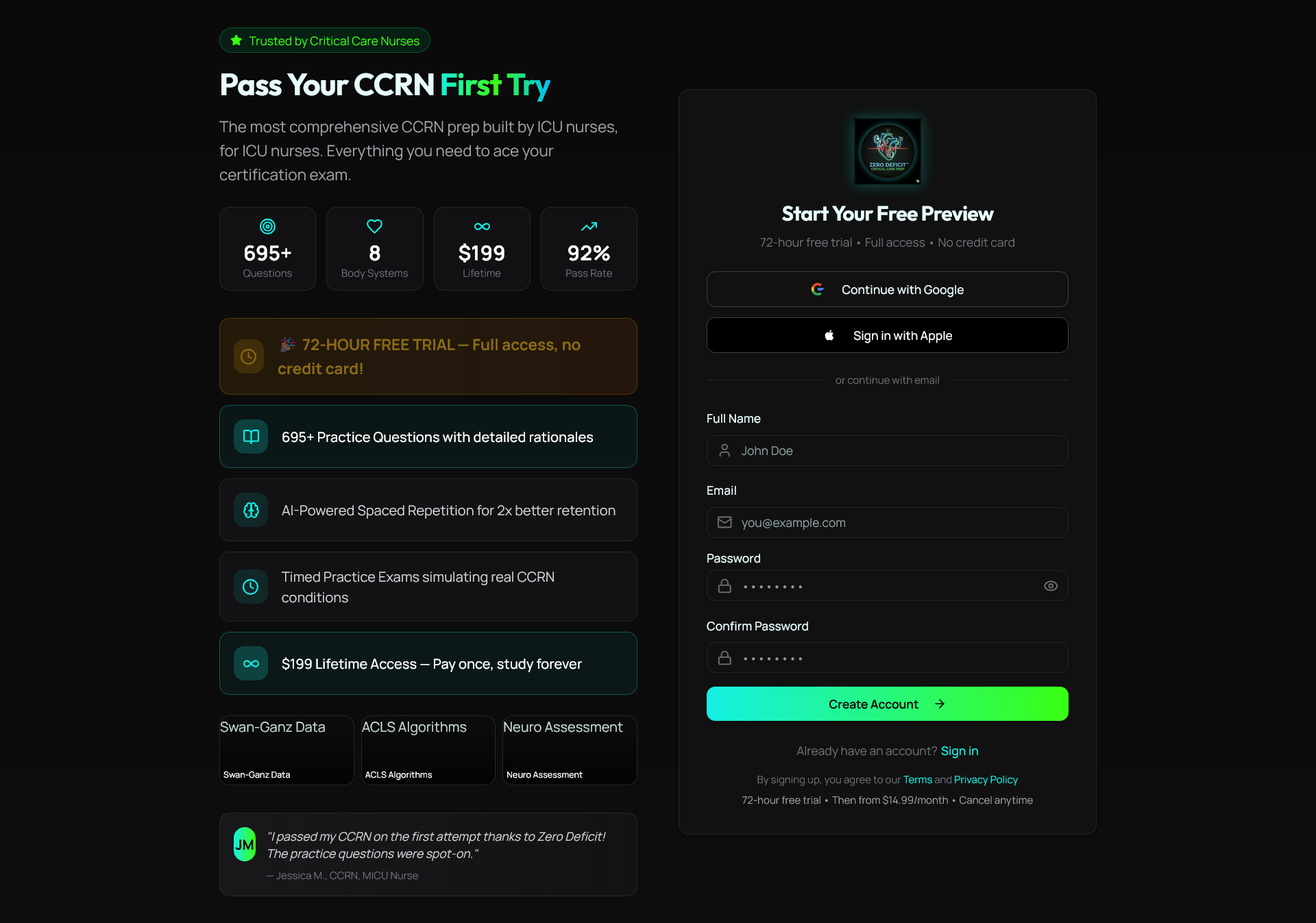
The CCRN study guides organize this exact material by body system, so you can review sepsis, ventilation, and PAD protocols in the same structure the exam uses rather than piecing it together from scattered sources. When you’re ready to test what’s actually sticking, the practice question bank gives you over 695 scenario-based questions with detailed rationales written by ICU nurses, not generic test-prep writers. Each rationale walks through why an answer is correct and why the tempting wrong answer isn’t, which is where most self-study falls short. Start with a topic guide on shock and vasopressors, then run a timed set from the practice test hub to see where your recall actually holds up under pressure.
Sources
- Surviving Sepsis Campaign: International Guidelines for Management of Sepsis and Septic Shock 2026
- Protocol-driven care in the intensive care unit: a tool for quality
- Guide to supportive care in critical illness - EMCrit Project
FAQ
What Are the 7 C’s of Critical Care?
Definitions vary across programs and institutions, and there’s no single AACN-endorsed enumeration. Rather than repeat an unverified list, focus your review on the protocol categories that actually appear on the CCRN blueprint: cardiovascular, pulmonary, neuro, sepsis/MODS, endocrine, and renal.
Is There a Free PDF of the 3rd Edition of ICU Protocols?
Availability depends on the publisher and your institution’s library access, and we can’t point you to a specific free download. For current, guideline-backed protocol targets, the SCCM and Surviving Sepsis Campaign resources linked throughout this article are freely accessible and regularly updated.
What Are the Five Parameters Shown on an ICU Monitor?
Most bedside monitors display heart rate, blood pressure (often arterial line MAP), oxygen saturation, respiratory rate, and temperature, with additional lines like CVP or ICP added when clinically indicated.
What Are the Basic Requirements of an ICU?
Core requirements include continuous physiologic monitoring, mechanical ventilation capability, vasoactive drug infusion capacity, and a nurse-to-patient ratio that supports frequent reassessment, typically alongside intensivist or critical care coverage.
How Do I Actually Retain All These Protocol Targets for the CCRN?
Repetition against realistic scenarios works better than flashcards alone. Zerodeficitccrnprep’s practice question bank applies these exact targets, sepsis timing, tidal volume math, RASS scoring, to scenario-based questions with full rationales.
Recommended
- Role of Nurses in the ICU: A Complete Clinical Guide | Zero Deficit CCRN Prep
- The Role of Leadership in Nursing: An ICU Guide | Zero Deficit CCRN Prep
- The Role of Ethics in Critical Care: 2026 ICU Guide | Zero Deficit CCRN Prep
- CCRN Infection Control Review Topics: ICU Nurse Guide | Zero Deficit CCRN Prep
Take a Multisystem practice quiz
Master sepsis, shock, MODS, and multi-organ failure scenarios.
Get Your Free 20-Question CCRN Diagnostic
20 high-yield CCRN-style questions across every body system, with detailed rationales — emailed to you instantly.
No spam. One email + a couple of helpful follow-ups. Unsubscribe anytime.
Ready to pass your CCRN?
Join 12,000+ nurses using Zero Deficit — 695+ practice questions with rationales, AI-powered weak-area drilling, and spaced-repetition flashcards.
Start Free Trial →