Pharmacology for Critical Care: ICU Nurse's Guide
TL;DR:
- Critical care pharmacology focuses on medication management tailored to critically ill patients, considering altered organ function and interventions. It involves understanding pharmacokinetics and pharmacodynamics to optimize therapy and reduce harm. Incorporating pharmacist expertise improves patient outcomes and safety in complex ICU environments.
Pharmacology for critical care is defined as the specialized application of drug therapy to critically ill patients, with the goal of maximizing therapeutic effect while minimizing harm in a physiologically unstable environment. The formal term used across professional bodies including the AACN, SCCM, and the American Society of Health-System Pharmacists is critical care pharmacotherapy. This guide covers what that means in practice: how organ dysfunction rewrites the rules of drug handling, which pharmacology concepts matter most at the bedside, and how understanding these principles directly improves patient outcomes. If you are preparing for the AACN Adult CCRN exam, pharmacology is not a side topic. It runs through every system on the blueprint.
What is pharmacology for critical care, and why does it differ from general nursing?
Critical care pharmacotherapy is not simply a higher dose of standard nursing pharmacology. The ICU patient’s body handles drugs differently than a stable patient’s body does. Organ dysfunction, shock states, and life-support interventions all alter how drugs are absorbed, distributed, metabolized, and eliminated. That means the dose that works in a step-down unit can be toxic or completely ineffective in the ICU.

The ESICM Core Skills professional curricula define ICU pharmacotherapy as a distinct discipline focused on vasoactive agents, antimicrobials, sedation, and analgesia, each requiring individualized dosing based on dynamic patient physiology. That specificity matters. A nurse who understands why a dose changes is far safer than one who only knows what the standard dose is.
The importance of pharmacology in critical care also shows up in outcome data. A meta-analysis of 37,925 patients found that integrating specialized critical care pharmacists into ICU teams reduced mortality with an odds ratio of 0.72 and reduced adverse drug events with an odds ratio of 0.39. Those numbers represent real patients who survived because someone on the team understood drug therapy at a deeper level.
How critical illness changes drug pharmacokinetics and pharmacodynamics
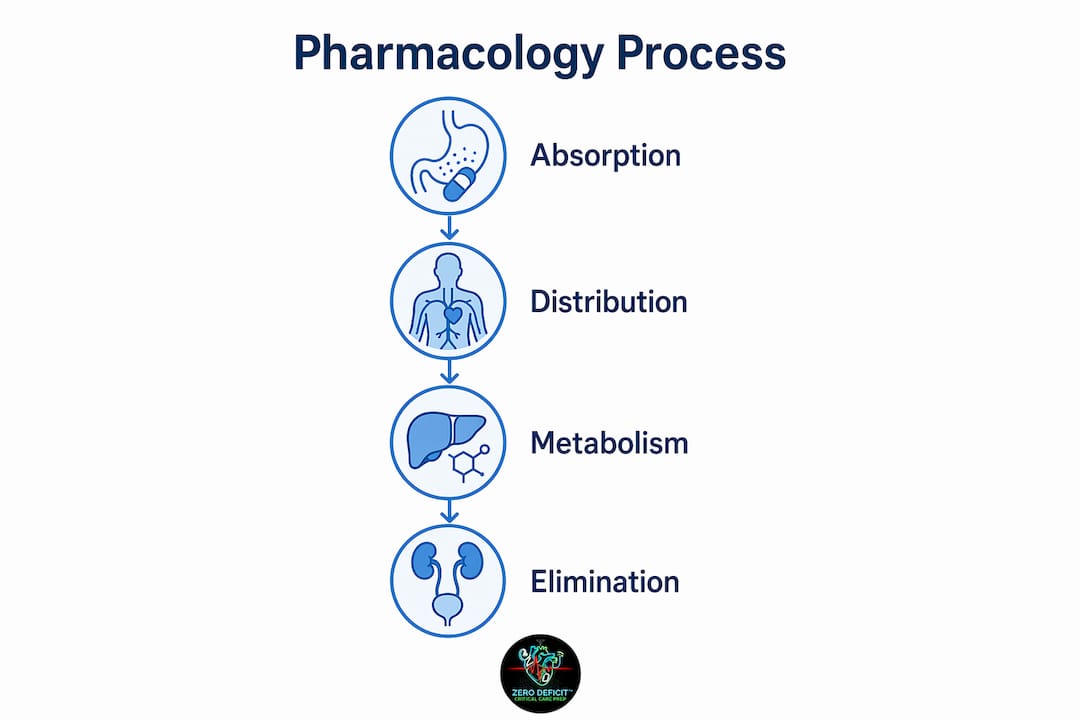
Pharmacokinetics describes what the body does to a drug: absorption, distribution, metabolism, and elimination. Pharmacodynamics describes what the drug does to the body. In the ICU, both are disrupted simultaneously, and often unpredictably.
Organ dysfunction rewrites drug handling
Acute kidney injury reduces drug elimination. Hepatic dysfunction impairs metabolism of drugs like fentanyl, midazolam, and propofol. Distributive shock increases volume of distribution, meaning a standard loading dose may produce subtherapeutic levels. Capillary leak in sepsis pushes drugs into interstitial spaces, further diluting plasma concentrations.
- Absorption: Gut hypoperfusion in shock reduces enteral drug absorption. Oral medications are unreliable in hemodynamically unstable patients.
- Distribution: Fluid resuscitation expands volume of distribution. Hydrophilic drugs like aminoglycosides and vancomycin are most affected.
- Metabolism: Hepatic blood flow decreases in low cardiac output states, slowing first-pass and systemic metabolism.
- Elimination: Acute kidney injury accumulates renally cleared drugs. Creatinine clearance must be recalculated frequently, not assumed from admission labs.
ICU interventions physically remove drugs
Continuous renal replacement therapy (CRRT) and plasma exchange (PLEX) can remove drugs from the bloodstream, requiring real-time dose adjustments guided by drug molecular weight, protein binding, and treatment intensity. Mechanical ventilation changes pulmonary drug delivery. Each intervention adds a variable you must account for.
Delayed effects and quasi-titratable infusions
Quasi-titratable infusions like diltiazem and nicardipine reach their maximal hemodynamic effect hours after a dose change, not minutes. Titrating too aggressively based on an immediate response can cause severe hypotension hours later when the full effect arrives.
Pro Tip: When titrating nicardipine or diltiazem, wait the full pharmacokinetic window before making another rate change. Premature uptitration is one of the most common causes of overshoot hypotension in the ICU.
Key pharmacology concepts critical care nurses must know
Safe ICU medication management requires more than knowing drug names. You need a working framework for monitoring, adjusting, and protecting patients from harm.
Core principles for bedside practice
- Dose to the patient, not the protocol. Renal function, hepatic function, weight, and hemodynamic status all change daily. Recalculate doses when any of these shift significantly.
- Monitor therapeutic effect and toxicity together. Vancomycin AUC/MIC targeting, vasopressor titration to MAP goals, and propofol infusion syndrome screening are all examples of dual monitoring. You are watching for both effect and harm simultaneously.
- Minimize polypharmacy at admission. Holding unnecessary medications at ICU admission reduces drug interactions and adverse events. Every drug added to a critically ill patient’s regimen increases complexity and risk.
- Know your drug half-lives. A drug with a long half-life accumulates with repeated dosing. Fentanyl context-sensitive half-life extends significantly with prolonged infusions, which is why patients can remain sedated long after the drip stops.
- Understand receptor pharmacodynamics for vasopressors. Norepinephrine acts primarily on alpha-1 receptors to increase SVR. Vasopressin acts on V1 receptors independently of adrenergic pathways. Combining them in septic shock is not redundant. It is mechanistically complementary.
Monitoring markers you must track
Clinical and laboratory markers guide dose adjustments. Lactate clearance tracks tissue perfusion response to vasopressors. Serum creatinine and urine output guide renally cleared drug dosing. Liver function tests inform sedative and opioid metabolism. Daily reassessment of these markers is not optional in critical care pharmacotherapy.
Pro Tip: Build a mental checklist for every infusion: What is the goal? What is the toxicity sign? What lab or clinical marker tells me I am there? If you cannot answer all three, you are not ready to titrate.
The goal of critical care pharmacotherapy is rapid achievement and maintenance of therapeutic drug concentrations while vigilantly avoiding toxicity. That requires individualization and close monitoring, not preset algorithms applied without clinical judgment.
How do critical care pharmacists improve ICU patient outcomes?
Critical care pharmacists are not a luxury. They are a patient safety intervention with measurable outcome data.
The meta-analysis of 37,925 ICU patients showed that pharmacist integration reduced mortality (OR 0.72) and adverse drug events (OR 0.39). Those effect sizes are clinically meaningful. An OR of 0.39 for adverse drug events means the risk was cut by more than half.
| Pharmacist role | Clinical impact |
|---|---|
| Antimicrobial stewardship | Optimizes dosing for sepsis, reduces resistance |
| Renal dose adjustment | Prevents drug accumulation in AKI |
| Drug interaction screening | Catches QTc-prolonging combinations |
| Sedation protocol review | Reduces delirium and ventilator days |
| CRRT dosing guidance | Adjusts for extracorporeal drug removal |
The consensus recommendation for ICU patient-to-pharmacist ratio is below 20:1. Above that threshold, pharmacist workload limits the depth of review each patient receives. Most ICUs in the United States do not yet meet this standard.
“The critical care pharmacist functions as a clinical expert, not a dispensing resource. Their value is in real-time dose optimization, not just order verification.”
As a nurse, your collaboration with the pharmacist is one of the most effective safety tools you have. Ask questions. Flag concerns. The pharmacist’s knowledge of drug properties complements your bedside clinical assessment.
Common drugs used in critical care and their pharmacology essentials
The ESICM Core Skills curricula identify four drug classes as the core of ICU pharmacotherapy: vasoactive agents, sedatives and analgesics, antimicrobials, and drugs affected by renal replacement therapy.
Vasoactive agents
Vasopressors and inotropes require understanding receptor pharmacodynamics, not just dose ranges. Norepinephrine is the first-line vasopressor in septic shock per SCCM Surviving Sepsis Campaign guidelines. Epinephrine adds beta-1 inotropic effect alongside alpha-1 vasoconstriction. Dobutamine is a pure inotrope with beta-1 dominance, used in cardiogenic shock when contractility is the primary problem. Understanding vasopressor pharmacodynamics helps you predict hemodynamic responses before they happen.
Sedatives and analgesics
Propofol causes dose-dependent vasodilation and myocardial depression. Dexmedetomidine provides sedation without respiratory depression, making it useful for spontaneous breathing trials. Fentanyl is highly lipophilic and accumulates with prolonged infusions. Benzodiazepines increase delirium risk and are now avoided as first-line sedation per SCCM PADIS guidelines. The balance between adequate sedation and delirium prevention is one of the most clinically demanding aspects of ICU pharmacotherapy.
Antimicrobials in sepsis
Sepsis alters antimicrobial pharmacokinetics significantly. Increased volume of distribution reduces peak concentrations of hydrophilic drugs. Augmented renal clearance in early sepsis can cause subtherapeutic levels of renally cleared drugs like piperacillin-tazobactam. Antimicrobial dosing in sepsis requires PK/PD optimization, not just weight-based standard dosing.
- Beta-lactams are time-dependent: maintain concentrations above MIC for the dosing interval. Extended infusions improve target attainment.
- Aminoglycosides are concentration-dependent: a high peak relative to MIC drives efficacy. Once-daily dosing maximizes the peak.
- Vancomycin efficacy is best predicted by AUC/MIC ratio, not trough alone. AUC-guided dosing is now the standard per ASHP/IDSA/SIDP guidelines.
Key Takeaways
Critical care pharmacotherapy requires individualized, real-time dose management based on organ function, ICU interventions, and drug-specific pharmacokinetics.
| Point | Details |
|---|---|
| Pharmacokinetics change in the ICU | Organ dysfunction, shock, and therapies like CRRT alter drug absorption, distribution, and elimination daily. |
| Delayed drug effects cause harm | Quasi-titratable infusions like nicardipine reach peak effect hours after titration, requiring cautious dose changes. |
| Pharmacist integration saves lives | Meta-analysis of 37,925 patients showed mortality OR 0.72 and adverse drug event OR 0.39 with pharmacist involvement. |
| Polypharmacy increases risk | Holding unnecessary medications at ICU admission reduces drug interactions and adverse events. |
| Drug class knowledge drives safety | Vasopressors, sedatives, and antimicrobials each require PK/PD understanding, not just dose memorization. |
Why pharmacology mastery is the skill that separates good ICU nurses from great ones
I have seen nurses with years of ICU experience still titrating nicardipine every 15 minutes because the blood pressure had not moved yet. They did not know the drug had not reached its peak effect. That is not a knowledge gap about the dose. It is a gap in understanding pharmacokinetics, and it is the kind of mistake that sends a patient into refractory hypotension at 2 a.m.
The nurses who practice at the highest level treat pharmacology the way they treat hemodynamics: as a dynamic system that requires constant reassessment. They ask why a drug is not working before they increase the dose. They check renal function before assuming a standard dose is safe. They call the pharmacist not just when something goes wrong, but proactively, when they see a patient’s physiology shifting.
The CCRN exam tests this exact level of thinking. Questions about vasopressors, sedation protocols, and antimicrobial dosing are not asking you to recite a dose range. They are asking you to apply clinical reasoning to a patient scenario. That is the same skill that keeps your patients safe every shift.
One more thing: do not underestimate the pharmacist on your team. The consensus recommendation for a pharmacist-to-patient ratio below 20:1 exists because pharmacists catch what nurses and physicians miss under time pressure. Use that resource. Ask them to round with you. Their input on a complex antimicrobial regimen or a sedation wean can change a patient’s trajectory.
— Zero
Zerodeficitccrnprep has the pharmacology prep you need for the CCRN
Pharmacology runs through every section of the AACN Adult CCRN exam blueprint, from cardiovascular drips to sepsis management to renal dosing adjustments. Knowing the concepts is one thing. Applying them under exam pressure is another.
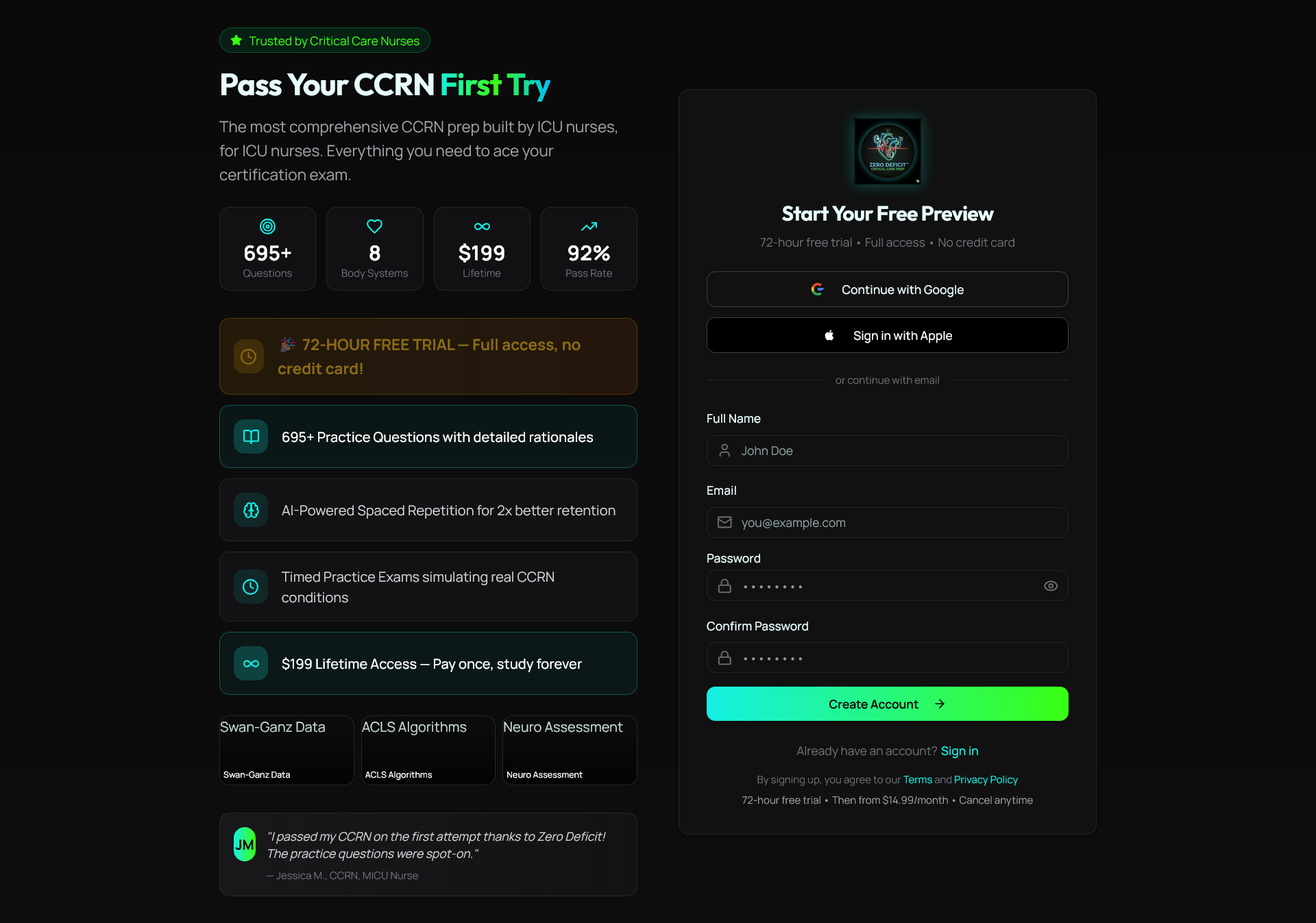
Zerodeficitccrnprep gives you CCRN study guides built by expert ICU nurses, covering all eight body systems with the pharmacology detail the exam actually tests. The platform includes over 695 CCRN practice questions with detailed rationales that explain the pharmacology behind every answer, not just the correct choice. AI-powered review tools personalize your study based on where your gaps are. Nurses who use Zerodeficitccrnprep report passing on their first attempt. That result comes from preparation that goes deep enough to matter.
FAQ
What is critical care pharmacotherapy?
Critical care pharmacotherapy is the specialized practice of selecting, dosing, and monitoring medications for critically ill patients whose physiology alters normal drug handling. It accounts for organ dysfunction, life-support interventions, and dynamic patient conditions.
How does acute kidney injury affect drug dosing in the ICU?
Acute kidney injury reduces renal drug elimination, causing accumulation of renally cleared medications like vancomycin and aminoglycosides. Doses must be adjusted based on current creatinine clearance, not admission values.
Why does CRRT change medication dosing?
CRRT physically removes drugs from the bloodstream based on molecular weight, protein binding, and filter characteristics. Drugs cleared by CRRT require supplemental dosing or extended intervals to maintain therapeutic levels.
What vasopressors are most commonly used in septic shock?
Norepinephrine is the first-line vasopressor in septic shock per SCCM Surviving Sepsis Campaign guidelines. Vasopressin is added as a second agent to reduce norepinephrine requirements through a complementary receptor mechanism.
How does pharmacology appear on the CCRN exam?
The AACN Adult CCRN exam tests pharmacology within clinical scenarios across all body systems, including vasopressor selection, sedation management, and antimicrobial dosing. Understanding PK/PD principles, not just drug names, is required to answer these questions correctly.
Recommended
Take a Multisystem practice quiz
Master sepsis, shock, MODS, and multi-organ failure scenarios.
Get Your Free 20-Question CCRN Diagnostic
20 high-yield CCRN-style questions across every body system, with detailed rationales — emailed to you instantly.
No spam. One email + a couple of helpful follow-ups. Unsubscribe anytime.
Ready to pass your CCRN?
Join 12,000+ nurses using Zero Deficit — 695+ practice questions with rationales, AI-powered weak-area drilling, and spaced-repetition flashcards.
Start Free Trial →