Test Anxiety Reduction for Nurses: Your CCRN Prep Guide
TL;DR:
- Effective test anxiety reduction for nurses involves evidence-based techniques like mindfulness, therapeutic touch, and music therapy. Combining these methods with cognitive reframing and structured study routines significantly enhances exam confidence and performance. Incorporating stress management into nursing education builds resilience for high-pressure clinical practice.
Test anxiety reduction for nurses is defined as the deliberate application of evidence-based cognitive, behavioral, and physiological techniques to prevent exam stress from impairing clinical reasoning during high-stakes certification tests. Between 25% and 40% of nursing students experience significant test anxiety, making it one of the most common barriers to CCRN certification success. The good news is that structured interventions, including mindfulness, therapeutic touch, and cognitive reframing, produce measurable improvements in both anxiety scores and exam performance. Understanding which techniques work, and when to use them, is the first step toward passing your critical care certification with confidence.
What proven methods reduce test anxiety in nurses preparing for critical care exams?
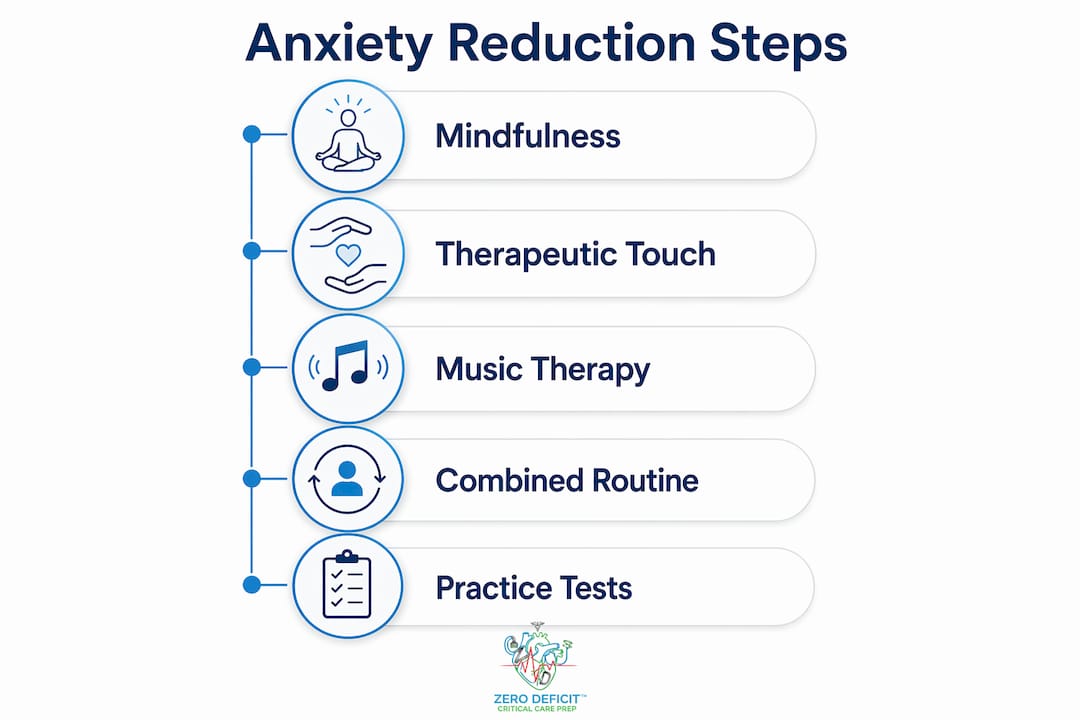
Non-pharmacological interventions are the most practical and effective tools for nursing exam stress relief. Three methods have the strongest 2026 research support: structured mindfulness training, therapeutic touch, and media-based music therapy.
Mindfulness training
Structured mindfulness training across eight sessions significantly reduces anxiety levels in nursing students preparing for major competency exams, with a mean difference of 2.89 and a Cohen’s d of 3.81. That effect size is large by any clinical standard, meaning the intervention produces a real, meaningful shift in how nurses experience exam stress. Mindfulness works by training your prefrontal cortex to interrupt the amygdala’s threat response before it escalates to panic. For CCRN candidates, a daily 10-minute body scan or breath-focused session during the final four weeks of prep is enough to build this regulatory capacity.
Mindfulness-based stress reduction programs also improve coping ability for educational stress more broadly, with statistically significant differences in post-test anxiety and mindfulness scales (p<0.05). This means the benefit extends beyond the exam room and into your ICU shifts.
Therapeutic touch
A single 20-minute therapeutic touch session before an exam significantly lowers test anxiety compared to controls, with an ANCOVA result of F=144.685, p<0.001, and ηp²=0.771. That effect size is striking. A trained peer or instructor can administer this intervention in the hour before your exam, making it logistically feasible even on test day.
Music therapy
A 15-minute music therapy session using media-based delivery reduces anxiety scores (d=0.65) and improves simulation test performance (p=0.041, d=0.25). The anxiety effect is moderate to large, and the performance benefit is real. Listening to 60–80 BPM instrumental music before a timed practice block is a low-cost, zero-risk strategy any nurse can use tonight.
Pro Tip: Combine all three methods in a pre-exam routine: 10 minutes of mindfulness in the morning, a music therapy session 30 minutes before you sit down to study, and a therapeutic touch session from a trusted colleague on exam day.
How can nurses use cognitive strategies and study habits to reduce exam prep anxiety?
Cognitive strategies address the mental patterns that turn normal exam stress into performance-blocking anxiety. The most effective shift is cognitive reframing, which means training yourself to view each exam question as an independent, manageable problem rather than a threat to your career. Catastrophic thinking, “If I miss this question, I’ll fail everything,” is the primary cognitive driver of test anxiety escalation. Reframing interrupts that pattern before it takes hold.
Practice tests under simulated exam conditions reduce anxiety more effectively than passive review or forum-based study. Familiarity with the test format removes a major source of uncertainty, which is one of anxiety’s primary fuels. Building a consistent study routine also matters. Predictable study blocks reduce the cognitive load of deciding when and what to study, freeing mental energy for actual learning.
One underappreciated strategy is limiting exposure to online nursing exam forums in the final two weeks before your test. Exposure to panic-inducing discussions near test day worsens anxiety and distorts your perception of difficulty. Replace forum scrolling with timed practice blocks and detailed rationale review.
A daily routine that supports both study and self-care looks like this:
- Wake at a consistent time and eat a protein-rich breakfast before any study session.
- Complete a 10-minute mindfulness or breathing exercise before opening your study materials.
- Study in 45-minute focused blocks, then take a 10-minute physical break.
- Complete one timed practice block of 25–50 questions with full rationale review.
- Log two or three concepts you got wrong and review them before bed, not the night before the exam.
- Set a hard stop time for studying each evening and protect your sleep window.
- Avoid nursing exam forums and social media discussions about the CCRN in the final 14 days.
Understanding critical thinking in nursing also strengthens your ability to approach questions objectively, which directly reduces the emotional reactivity that feeds test anxiety.
What exam-day techniques help nurses stay focused during critical care certification tests?
Exam-day anxiety management requires a specific, pre-rehearsed protocol. Improvising in the moment rarely works when cortisol is elevated and time pressure is real.
The most reliable tool is the mental reset sequence: stop reading, exhale fully, name three things you can see, then return to the question. Successful candidates rehearse this sequence before test day so it executes automatically at the first sign of panic. The sequence works by activating the parasympathetic nervous system and interrupting the cognitive narrowing that makes hard questions feel impossible.
Scheduled breaks during the exam serve as strategic reset periods, not rest stops. Use them for light physical movement, two minutes of slow breathing, and deliberate mental detachment from the previous question block. Returning to the test after a proper break improves focus on subsequent questions.
Nutrition, hydration, and sleep are not optional variables. Cognitive performance degrades measurably with even mild dehydration, and a single night of poor sleep before the exam reduces working memory capacity. Eat a balanced meal two hours before your test time, bring water if the testing center allows it, and protect the 48 hours before your exam as a low-stress window.
Exam-day do’s and don’ts:
- Do arrive 30 minutes early to acclimate to the environment.
- Do use your scheduled breaks for movement and breathing, not question review.
- Do treat each question as independent. A wrong answer does not predict the next one.
- Do bring earplugs or noise-canceling options if the testing center permits them.
- Don’t discuss the exam content with other candidates before or during breaks.
- Don’t skip meals or rely on caffeine as your primary energy source.
- Don’t review new material the morning of the exam.
- Don’t catastrophize a difficult question block. Hard questions appear in every exam.
Pro Tip: Record your mental reset sequence as a voice memo and listen to it during your commute to the testing center. Hearing your own voice walk through the steps reinforces the habit under real stress conditions.
How can nursing programs embed anxiety reduction into training for lasting results?
Integrating stress reduction into nursing curricula produces benefits that extend well beyond a single certification exam. Mindfulness and music therapy not only reduce exam anxiety but also build emotional resilience that supports long-term clinical performance. This matters because ICU nurses face sustained high-stakes decision-making throughout their careers, not just on test day.
Educators play a direct role in this process. Programs that include structured mindfulness sessions, therapeutic touch training, and resilience-building workshops produce graduates who manage stress more effectively in clinical settings. The AACN’s Synergy Model recognizes caring practices and response to diversity as core nurse competencies, both of which are strengthened by emotional regulation training.
Nurses who want to understand their options for formal support can also review testing accommodations for anxiety, which outlines how an anxiety diagnosis can support access to extended time or reduced-distraction testing environments through official channels.
| Program element | Documented benefit |
|---|---|
| Eight-session mindfulness training | Large reduction in pre-exam anxiety (Cohen’s d = 3.81) |
| Pre-exam therapeutic touch | Significant anxiety reduction in a single session (ηp² = 0.771) |
| Media-based music therapy | Moderate anxiety reduction and improved simulation performance |
| Timed practice test integration | Greater familiarity with exam format; reduced uncertainty-driven anxiety |
| Resilience and coping workshops | Improved long-term stress management for clinical careers |
The key insight for both educators and nurses is that moderate anxiety improves focus and performance. Total elimination of exam stress is neither realistic nor the goal. The target is preventing escalation to panic, which is the point where anxiety impairs clinical reasoning and costs you correct answers.
Key takeaways
Effective nursing exam stress relief requires combining evidence-based non-pharmacological techniques, cognitive reframing, and structured study habits before and during critical care certification exams.
| Point | Details |
|---|---|
| Mindfulness reduces anxiety significantly | Eight structured sessions produce a large effect (Cohen’s d = 3.81) on pre-exam anxiety. |
| Therapeutic touch works fast | A single 20-minute session before the exam lowers anxiety scores with a very large effect size. |
| Cognitive reframing is non-negotiable | Treating each question as independent stops catastrophic thinking before it escalates. |
| Practice tests outperform passive review | Simulated exam conditions build familiarity and reduce uncertainty-driven anxiety. |
| Moderate anxiety is an asset | The goal is managing escalation to panic, not eliminating all stress before the CCRN. |
What I’ve learned about anxiety and the CCRN after years in critical care prep
Most nurses I work with arrive at CCRN prep believing their anxiety is a weakness. It is not. The nurses who struggle most on exam day are not the most anxious ones. They are the ones who have no plan for what to do when anxiety spikes at question 80 of 150.
The mental reset sequence is the single most underused tool in nursing exam prep. Every ICU nurse already uses a version of it at the bedside. When a patient decompensates, you stop, assess, and act in sequence. The exam is no different. The problem is that most nurses never practice this sequence in a test context, so when panic hits, they freeze instead of executing.
I have also seen nurses spend weeks on passive review, reading notes and watching videos, while avoiding timed practice tests because they fear a low score. That avoidance is anxiety driving study behavior in the wrong direction. A low practice score two weeks before the exam is information. It tells you exactly where to focus. A low score on test day is the consequence of not using that information.
The other thing worth saying plainly: you are already a critical care nurse. You make life-and-death decisions under pressure every shift. The CCRN is a test of knowledge you already use. Anxiety tells you the stakes are high. It is right about that. But it is wrong about your ability to meet them.
— Zero
Zerodeficitccrnprep: prep resources built for CCRN confidence
Knowing the anxiety management strategies is one part of the equation. Knowing the content cold is the other.
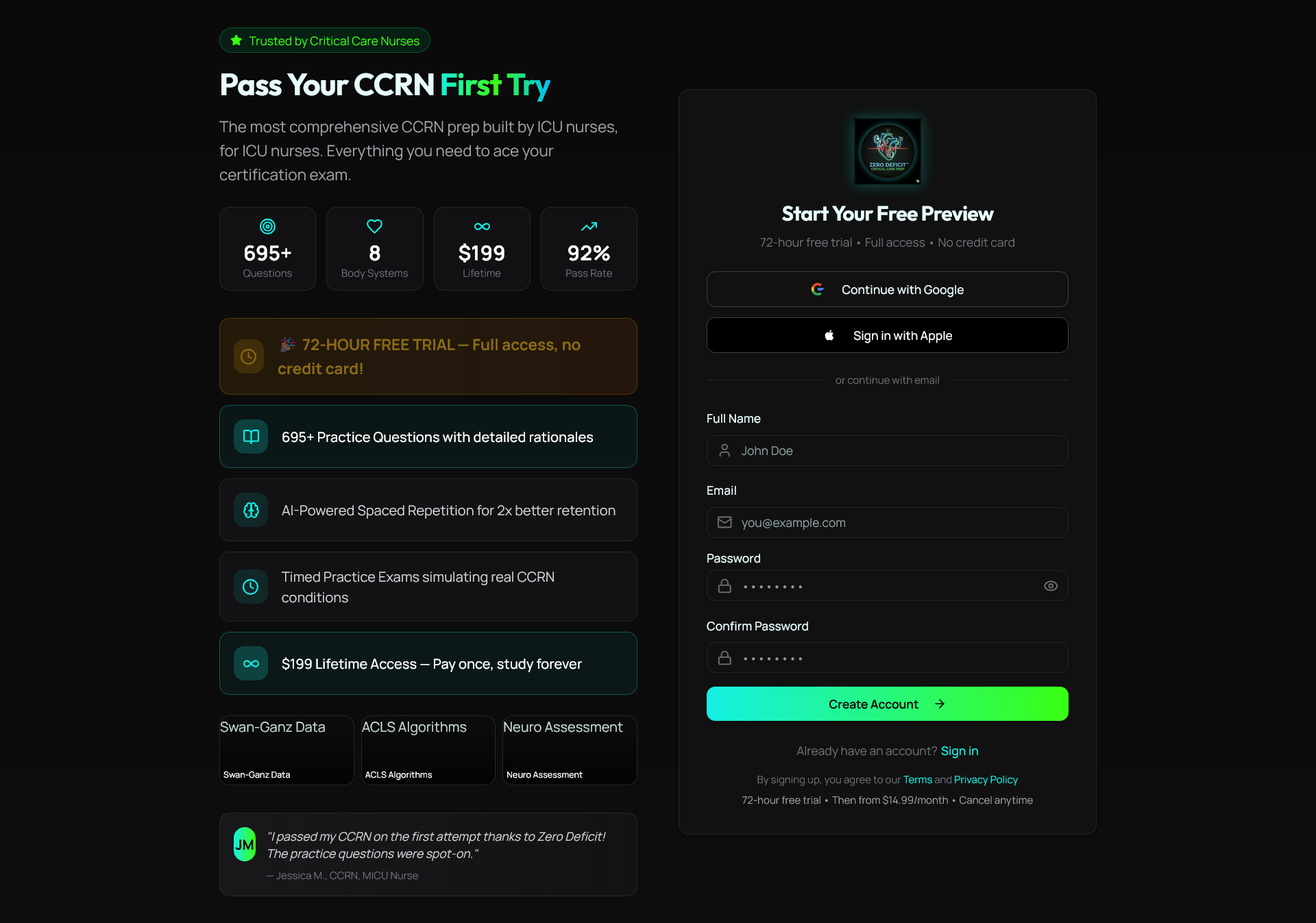
Zerodeficitccrnprep offers CCRN study guides covering all 8 body systems, written by expert ICU nurses and built around the AACN exam blueprint. The platform’s CCRN practice tests simulate real exam conditions with over 695 questions and detailed rationales for every answer. That combination of content mastery and exam familiarity is what turns anxiety from a liability into a performance edge. When you know the material and you know the format, confidence follows.
FAQ
What is test anxiety in nursing, and how common is it?
Test anxiety in nursing is defined as a stress response that impairs cognitive performance during high-stakes exams. Between 25% and 40% of nursing students experience significant levels of it during major certification exams.
Does mindfulness actually work for nursing exam stress relief?
Yes. Eight sessions of structured mindfulness training produce a large reduction in pre-exam anxiety (Cohen’s d = 3.81, p<0.001), making it one of the most evidence-supported interventions available to nursing students.
What should I do if I panic during the CCRN exam?
Execute a mental reset sequence: stop reading, exhale fully, ground yourself by naming three things you can see, then return to the question. Rehearsing this sequence before test day makes it automatic under pressure.
Are practice tests better than passive study for reducing anxiety?
Practice tests under simulated exam conditions reduce anxiety more effectively than passive review or forum-based study because they eliminate format uncertainty, which is a primary driver of test anxiety escalation.
Can nursing programs reduce test anxiety through curriculum changes?
Yes. Programs that integrate structured mindfulness training, therapeutic touch, and resilience workshops produce graduates with significantly lower exam anxiety and stronger long-term coping skills for clinical careers.
Recommended
- How to Build Exam Confidence for CCRN Success | Zero Deficit CCRN Prep
- How educators boost CCRN certification success for nurses | Zero Deficit CCRN Prep
- Why Is Confidence Important in Exams: A Nurse’s Guide | Zero Deficit CCRN Prep
- CCRN Spaced Repetition: Study Smarter for Certification | Zero Deficit CCRN Prep
Take a Neurological practice quiz
Test your knowledge of stroke, ICP, seizures, and neuro assessment.
Get Your Free 20-Question CCRN Diagnostic
20 high-yield CCRN-style questions across every body system, with detailed rationales — emailed to you instantly.
No spam. One email + a couple of helpful follow-ups. Unsubscribe anytime.
Ready to pass your CCRN?
Join 12,000+ nurses using Zero Deficit — 695+ practice questions with rationales, AI-powered weak-area drilling, and spaced-repetition flashcards.
Start Free Trial →